As an Amazon Associate, we earn from qualifying purchases. Some links on this site are affiliate links at no extra cost to you. Our recommendations are based on thorough research and editorial judgment.

How to Spot Counterfeit Vinyl Records

To spot counterfeit vinyl records, check the packaging quality and artwork. Look for clear images and sharp text; blurred images often indicate fakes. Examine the matrix numbers; genuine records have unique, clear numbers. Pay attention to prices—if too low, it might be a counterfeit. Also, test the audio quality; counterfeits usually sound distorted. Engaging with fellow collectors can help sharpen your skills. Interested in more tips? There’s much more to uncover about keeping your collection authentic.
Key Takeaways
- Check packaging quality for blurred images, pixelated barcodes, and extensive color richness indicating authenticity.
- Inspect matrix numbers for clarity, unique identifiers, and the presence of engineer stamps.
- Be cautious of prices; significantly lower prices can indicate counterfeit records.
- Purchase from trusted retailers and investigate seller reputations to avoid counterfeit risks.
- Engage with vinyl communities to share insights and educate on counterfeit spotting techniques.
Understanding Counterfeits vs. Bootlegs
You may be interested
When venturing into the world of vinyl records, one might easily stumble upon counterfeits and bootlegs. Counterfeit records are unauthorized reproductions designed to mislead buyers by mimicking an official release. They aim to trick collectors into believing they are purchasing legitimate items for a profit. Bootlegs, on the other hand, feature unofficial recordings, like live performances, and often honor rare music. They do not imitate official branding, usually being marked as unauthorized. While bootlegs are illegal, they receive some sympathy for their content. Collectors should recognize these differences to avoid financial loss. By understanding these terms, an informed decision can be made before any purchase is finalized. Vinyl record cleaners offer cost-effective solutions for maintaining the quality of your legitimate collection. Happy collecting!
Key Indicators of a Counterfeit Record

Spotting counterfeit records requires a keen eye and attention to detail. One of the first signs to look for is packaging quality, as counterfeit vinyl often features blurred images or pixelated barcodes. Check the ink used; authentic records use oil-based inks, giving them richer colors, while counterfeits may look faded. Next, examine the runout groove for clear, machine-stamped matrix numbers. Counterfeits might lack these identifiers or have poor markings. A suspiciously low price can also indicate a counterfeit, as genuine records maintain their value. Finally, listen closely to the audio quality; counterfeit records typically suffer from distortion, while authentic ones deliver a crisp, high-fidelity sound. Keep these indicators in mind to refine your collecting skills. Additionally, be aware that vinyl playback typically provides a warmer, richer sound compared to digital formats, which could be a deciding factor when assessing the authenticity of a record’s sound quality.
Recommended Products

ACHIEVE CRISP, CLEAR SOUND: This 5-in-one vinyl record cleaning kit includes all the benchmark essentials for a spotless and rich sounding collection. In this kit, you will receive (1) Velvet Brush (1) Microfiber Brush (1) Stylus Brush (1) bottle of Cleaning Solution and (1) handy Storage Pouch. With these tools, you’ll be able to tackle any cleaning session with ease and perfection.

【All-in-one Turntable Tool】- The Viborg LP628B Record Weight Stabilizer not only removes additional noise introduced by dampening surface and bubble level, but also helps keep the record flush. Quality machining of aluminum and an attractive black finish make it a sleek addition to any turntable setup.

【2 in 1 Vinyl Record Cleaner Unique Design】 This 2 in 1 record brush is made by the soft velvet ,can gently remove the dust on the record and keep away from scratching,another small cleaner brush is designed to clean the stylus, the clear plastic cover can store the two brushes and keep clean from dust.
Examining Vinyl Packaging and Artwork

Vinyl packaging and artwork play an essential role in determining authenticity. When examining vinyl records, look closely at the colors. Original records from the 60s and 70s used oil-based inks, creating richer tones. Fake versions often have dull and pixelated prints. Check for embossed or textured marks on the sleeves, as genuine records typically feature these details. Jagged barcodes and artwork inconsistencies, like misspellings, can indicate counterfeits. If the record should have a gatefold sleeve, but it’s missing, consider it a red flag. Additionally, original releases might include inserts, posters, or booklets, which counterfeits often lack or present poorly. By scrutinizing the packaging and artwork, collectors can bolster their chances of spotting fakes. For vinyl enthusiasts, using built-in phono stages can enhance the listening experience, ensuring that even authentic records sound their best.
Recommended Products

✅【 SUPERIOR QUALLITY RECORD PROTECTION】: Vinyl Record Sleeves to Get the Ultimate Protection for Your Precious Vinyl Albums: Collecting priceless vinyl records require not just your investment but your commitment. That's why you need the EVEO Vinyl Record Sleeves Outer. These superior quality plastic record sleeves help preserve each one of your vinyl record albums and protects them from the outside against dirt, dust, scratches, liquid stains & other elements that may ruin their condition

Maximum Transparency: Big Fudge offers the best way to exhibit your precious vinyl record collection with our crystal clear vinyl record sleeves. Made from high-density polypropylene, our sleeves are transparent and don’t cloud easily unlike industry standard sleeves that are made from polyethylene.

Ultimate Vinyl Protection: Safeguard your vinyls with our protective vinyl inner sleeves, made from 3-ply polyethylene and archival rice paper for the ultimate protection against dust and blemishes.
Analyzing Matrix Numbers and Audio Quality

Understanding matrix numbers and audio quality can be essential for vinyl collectors. Matrix numbers are unique codes found in the runout groove of a record. Check for these machine-stamped numbers; counterfeit records often don’t have them. If you see handwritten matrix numbers, verify they match the catalog number on the label for authenticity. Look for an engineer’s stamp on genuine records, indicating professional oversight. When evaluating sound quality, remember that while some counterfeit records may sound better, they often lack the detail of authentic pressings. To be thorough, compare matrix numbers from different copies of the same album. Any discrepancies should raise concerns about potential counterfeiting. Strobe calibration discs facilitate accurate calibration for optimal sound playback. Stay informed and enjoy your collecting journey!
Recommended Products

Tachometer Disc is specially designed to detect the rotation speed of LP records, it can test the speed of the record player, test whether the speed of the turntable is accurate.
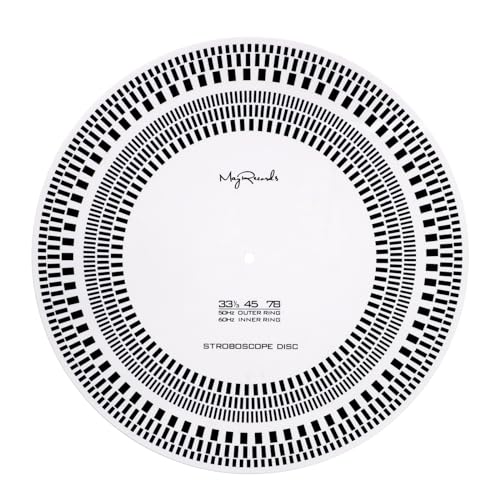
Professional Speed Detection: Ensure high-quality sound with this specially designed LP turntable strobe disc that accurately detects the rotational speed of your records.

Made of high-quality acrylic material, durable, firm and nonslip. Light and accurate, it can bring a good and wonderful calibration effect.
Pricing Awareness and Purchase Locations

Steering through the world of vinyl records can be tricky, especially when it comes to pricing and purchase locations. Buyers should exercise pricing awareness; if a limited edition vinyl, like a new Taylor Swift LP, is priced at $10-12, it likely signals a counterfeit. Always cross-reference prices with known market values to spot counterfeit deals effectively. Purchase from established record shops or trusted retailers to minimize risk. Unverified online marketplaces can be dangerous. Remember to research the seller’s reputation; positive feedback can be reassuring. Additionally, knowing countries notorious for counterfeit records can guide your decisions. By following these tips, buyers can navigate the vinyl scene with more confidence, reducing the chances of acquiring fake records. For an enhanced listening experience, some vinyl enthusiasts may opt for turntables with powered speakers that offer superior sound quality and easy setup.
Recommended Products

𝐏𝐨𝐰𝐞𝐫𝐞𝐝 𝐁𝐥𝐮𝐞𝐭𝐨𝐨𝐭𝐡 5.3 𝐁𝐨𝐨𝐤𝐬𝐡𝐞𝐥𝐟 𝐒𝐩𝐞𝐚𝐤𝐞𝐫𝐬: Pair the bookshelf speakers with your smartphone, tablet, Mac, or PC to play music wirelessly, no need to deal with messy wires.To use your turntable with our Bluetooth speakers: Your turntable must have Bluetooth transmitter/output(for connecting Bluetooth speakers and headphones). If your turntable only has a Bluetooth receiver/input (like most built-in speaker turntables for connecting mobile phones), it won’t work with our speakers. Check your turntable’s specs before ordering!

BLUETOOTH WIRELESS - Popular classic bookshelf speakers now can be enjoyed without the hassle of wires. Simply connection to an iPhone, Android, Tablet, PC or Mac.

𝐁𝐥𝐮𝐞𝐭𝐨𝐨𝐭𝐡 5.3 𝐁𝐨𝐨𝐤𝐬𝐡𝐞𝐥𝐟 𝐒𝐩𝐞𝐚𝐤𝐞𝐫𝐬: Pair the bookshelf speakers with your smartphone, tablet, Mac, or PC to play music wirelessly, no need to deal with messy wires. To use your turntable with our Bluetooth speakers: Your turntable must have Bluetooth transmitter/output(for connecting Bluetooth speakers and headphones). If your turntable only has a Bluetooth receiver/input (like most built-in speaker turntables for connecting mobile phones), it won’t work with our speakers. Check your turntable’s specs before ordering!
Artist and Label Verification
Authenticity in vinyl records largely hinges on proper artist and label verification. Start by familiarizing yourself with specific identifiers, like logos and catalog numbers, for each artist and record label. Research the artist’s historical releases to understand their typical outputs. This knowledge will help you spot inconsistencies. Utilize music databases such as Discogs to cross-reference album details, including release dates and label validity. If a record’s price seems too good to be true, it probably is. Follow social media platforms and collector forums to gain insights on specific artists and potential counterfeit issues. Engaging with collector communities can enhance your verification skills and alert you to common pitfalls in the vinyl collecting world. When choosing storage, it’s important to consider options that offer durable materials to protect your collection from dust and damage.
Common Signs of Counterfeit Vinyl
How can one easily identify counterfeit vinyl records? Start by examining the packaging quality. Counterfeit records often have blurred images and off-center text. Authentic vinyl features bright colors that are hard to replicate. Next, check the weight of the record; counterfeit vinyl is usually lighter, signaling poor manufacturing. Look closely at the matrix numbers in the runout groove. Genuine records have well-stamped matrix numbers, while counterfeit records may appear inconsistent. Also, be wary of pricing; if it’s much lower than similar items, it’s likely a fake. Finally, inspect the label information for mismatched catalog numbers or typos. According to expert reviewers, turntables like the Pro-Ject Debut Carbon EVO incorporate high-end components, enhancing audio performance and making them a reliable choice for genuine vinyl playback. These are all telltale signs of counterfeit records. Watch for these clues, and you’ll become a savvy collector in no time!
Genre-Specific Trends in Counterfeiting
Counterfeit records tend to thrive in certain music genres more than others. Rock and pop are particularly vulnerable due to high demand among collectors. Counterfeit records often target limited editions, especially in genres like hip-hop, where rare vinyl can attract scams. Be cautious when guiding through online marketplaces, as these platforms have made it easier for fakes to spread. In contrast, reggae and classical music genres usually see fewer counterfeits, as knowledgeable fans are more discerning. Always check for authenticity markers in your favorite genres, such as proper labels and quality packaging. By being aware of genre-specific trends in counterfeiting, collectors can make informed decisions and protect themselves from being scammed. Proper maintenance of vintage-style record players can also help ensure optimal performance and avoid being duped by counterfeit products.
Utilizing Community and Educational Resources
Understanding trends in counterfeiting is only one piece of the puzzle for vinyl collectors. Community forums are excellent platforms where collectors can share images of records they suspect are counterfeit. Experienced members can help assess authenticity and provide valuable feedback. Additionally, participating in social media groups dedicated to vinyl collecting keeps enthusiasts informed about current counterfeiting trends. Local record fairs also offer opportunities to connect with knowledgeable shop owners who can share their expertise. Using educational resources—like books and guides—helps build foundational knowledge about labels and matrix numbers. This knowledge is essential for discerning genuine records from counterfeits. For serious vinyl enthusiasts, using vinyl record weights can significantly enhance the quality of the listening experience while ensuring the stability and protection of authentic records. By engaging with these resources, collectors can strengthen their ability to spot fakes confidently.
Best Practices for Authentic Vinyl Buying
When venturing into the world of vinyl record buying, collectors should prioritize research and caution. Start by researching the market value of records. Significant price differences might indicate a counterfeit. Always purchase from reputable stores or trusted online platforms to minimize risks. Next, inspect the quality of the packaging. Check for sharpness in text and images; any blurriness can signal a fake. Validating details is essential—use databases like Discogs to verify catalog numbers and label designs. Finally, engage with the vinyl community. Join forums and discussions to learn from others’ experiences. This approach enhances your skills in authentication and helps you avoid counterfeit purchases. Remember, informed buying leads to better collections! For optimal storage and maintenance, consider using record dividers that protect and organize your vinyl collection.
Recommended Products

Complete Set for Collectors: 30 dividers + A-Z stickers, a full set to organize your 12-inch vinyl collection systematically.

26pcs Wooden Vinyl Record Dividers: Use these dividers to easily organize vinyl records, ensuring easy access to your favorite albums while maintaining cleanliness and visual appeal.

Find Records Faster: Create clearly labeled sections so you can browse your 12-inch vinyl collection without flipping through every album. Organize records by artist, genre, label, year, release, or condition.
Ethical Purchasing and Supporting Artists
Supporting artists through ethical purchasing is essential in the world of vinyl records. By avoiding fake records, collectors can directly support artists and help sustain their livelihoods. Purchasing authentic records from reliable retailers or directly from artists enables fair compensation for their work. This practice encourages artists to create more music, enriching the entire industry. Supporting local record shops and attending official merchandise events also strengthens community ties. When collectors participate in ethical purchasing, they contribute to a healthier music ecosystem. Every decision made impacts the industry, so steer clear of counterfeit products. This responsibility is vital for fostering accountability among sellers and ensuring that artists are rewarded for their craft. Be a part of the solution.
Reporting Suspected Counterfeits
Many collectors may find themselves questioning the authenticity of a vinyl record. If a collector suspects a counterfeit, the first step is to contact the seller and voice concerns about the record’s authenticity. If the seller can’t provide satisfactory answers or remains unresponsive, it is time to escalate the issue. Reporting the situation to local trading standards or organizations like the British Phonographic Industry (BPI) can help initiate an investigation. Keep meticulous records of the suspected counterfeit, including photos and all communications with the seller. Additionally, learn about local counterfeiting laws; they might offer further reporting options. Sharing experiences in vinyl collector forums can educate others, creating a community effort to avoid counterfeit pitfalls.
Frequently Asked Questions
How Can You Tell if a Vinyl Record Is Original?
To determine if a vinyl record is original, one should examine the vinyl packaging quality, scrutinize record label logos for consistency, and conduct an audio fidelity comparison to guarantee it aligns with official standards.
Are Counterfeit Vinyls Common?
Counterfeit vinyls, while present in the market, are less common than other formats. However, collectors emphasize counterfeit detection as essential for ensuring vinyl authenticity, especially amid rising market trends that increase demand for rare albums.
Are Demo Vinyls Worth Anything?
Demo vinyls can hold significant value depending on their rarity and desirability among collectors. The demo vinyl value is influenced by condition and provenance, appealing especially to dedicated demo vinyl collectors seeking unique releases and unreleased tracks.
What Is the Authenticity of a Record?
The authenticity of a record is determined by its pressing quality, accurate label design, and superior sound quality. Genuine records often exhibit unique identifiers and high-quality packaging, ensuring a reliable listening experience for collectors and enthusiasts.