As an Amazon Associate, we earn from qualifying purchases. Some links on this site are affiliate links at no extra cost to you. Our recommendations are based on thorough research and editorial judgment.


Understanding Speaker Placement for Vinyl

For the best vinyl sound, start with speaker placement. Position bookshelf speakers about four feet apart and floorstanding speakers around eight feet apart. Make certain the speakers are at ear height when seated. Aim them toward your listening area, creating a triangle shape for ideal audio clarity. Maintain a distance of 10 cm from walls and angle them slightly inwards. Finally, keep the turntable four to six feet away to minimize feedback. There’s more to explore about maximizing your sound experience.
Key Takeaways
- Keep bookshelf speakers approximately four feet apart and floorstanding speakers about eight feet apart for optimal audio separation.
- Position speakers at ear height for the best clarity in midrange and treble frequencies while listening to vinyl.
- Form a listening triangle by angling speakers inward towards the sweet spot to enhance sound quality.
- Maintain a distance of 4 to 6 feet between the turntable and speakers to minimize acoustic feedback during playback.
- Adjust speaker placement based on room acoustics to improve overall sound quality and clarity while maintaining optimal listening conditions.
What Speaker Placement Gets the Best Sound?
You may be interested

When setting up speakers, it is essential to remember that proper placement can dramatically enhance sound quality. Create a ‘listening triangle’ by positioning speakers at least 2 meters apart and the same distance from your listening spot. Aim for ear height when seated for ideal sound direction. Bookshelf speakers should be about four feet apart, while floorstanding speakers require around eight feet to minimize interference. To achieve clearer audio, keep speakers at least 10 cm from walls, angling them inward. Using isolation pads can help control bass frequencies and reduce reflected sound. Don’t hesitate to adjust angles and distances while testing different records; this will guide you towards the finest stereo sound quality based on your personal preferences. Consider using acid-free materials for any accompanying record sleeves to ensure long-term preservation of your vinyl collection.
How Far Apart Should Speakers Be Placed?

Finding the right distance between speakers is vital for enjoying high-quality sound. Bookshelf speakers should be placed about four feet apart for ideal stereo separation and soundstage. This distance helps guarantee clean sound waves and minimizes distortion. For floorstanding speakers, a distance of eight feet is recommended, which allows for better bass management and lower-frequency sound waves. When using speaker stands, make sure both types of speakers are equidistant for balanced audio. It’s important to maintain a distance of 4 to 6 feet between the turntable and speakers. This spacing minimizes vibration transfer and potential acoustic feedback. Be mindful of your room’s layout, as speaker placement may need adjusting based on available space to achieve the best sound. Additionally, consider the power requirements of your speakers, as adequate power is essential for clear sound without distortion at higher volumes.
Recommended Products

Wide Compatibility: The PERLESMITH speaker stands feature an adjustable width of 4.5" to 9", making it compatible with most small bookshelf and satellite speakers up to 11 lbs. These speaker stands are compatible with Bose, Harman Kardon, Polk, JBL, Sony, and more. Please note: it is not suitable for round or irregularly shaped speakers.

【 45° ADJUSTABLE TOP PLATE】The glass top plate of the speaker stand is adjustable by 45 degrees to fine-tune speaker direction for a better sound experience. Bookshelf speaker stands include rubber isolation pads to further dampen vibrations and reduce unwanted resonances.

45° ADJUSTABLE TOP PLATE - ENHANCE YOUR AUDIOVISUAL EXPERIENCE: Our speaker stands are designed to deliver the most enjoyable 3D stereo surround sound. Unlike other products, our speaker stands have a glass top plate that swivels 45°, allowing you to fine-tune the orientation of your speakers, bringing them closer to your ear for better surround sound. Free them from your desk to make better use of space in your room. Immerse yourself in the magic of music in any environment.
How High Up Should Speakers Be Placed?

How high should speakers be placed for the best sound? Ideally, speakers should be positioned at the height of your ears when seated. This arrangement enhances peak listening quality and improves sound clarity. Midrange and treble frequencies are more balanced at this height, allowing for a richer audio experience. If you plan to listen while standing, you may need to adjust speaker height to guarantee the sound reaches directly at ear level without going overhead. To achieve this, consider using adjustable speaker stands. These stands make fine-tuning easy, letting you customize the height based on your specific listening area. Proper speaker positioning ultimately contributes to a cohesive and enjoyable sound experience, filling your room elegantly with balanced sound. Incorporating record flattening devices can further enhance your audio experience by stabilizing vinyl records and reducing unwanted noise.
Recommended Products

SPEAKER STANDS FOR SURROUND SOUNDS: Elevate your audio experience with our height-adjustable speaker stand pair. They are designed to deliver the most enjoyable 3D stereo surround sound. With our floor speaker stand, you could get your speakers up closer to ear level for better surround sound. With a max height of 37.4", it easily clears the back of your sofa and do not take up much space of the living room

Universal Design - The rear speaker stands with 9.8"x9.8" plate can hold most speakers up to 22 LBS, such as the speakers from Klipsch, Sony, Yamaha, Edifier, Polk, Samsung, Bose, Vizio, JBL, Harmon Kardon and more.
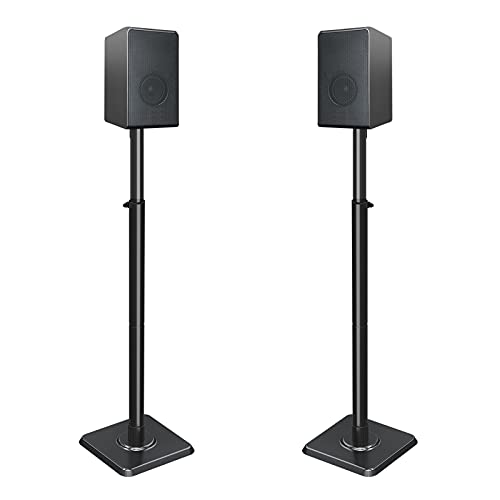
Height Adjustment - The speaker stands with extendable tube allow to adjust the height from 33" to 42" for optimum acoustics. Perfect for your home/theater entertainment system. Recommended Speaker Size:9.4" W x 18" H. Please check the speaker specs before purchase.
What Part of the Room Should Speakers Point Towards?

Speaker placement involves more than just height; it also relates to the direction in which the speakers face. Ideally, your speakers should point towards the listening position, forming an imaginary triangle. This arrangement enhances sound quality and audio clarity. Adjust the toe-in angle slightly to help the sound converge at the sweet spot, improving treble and mid-range response.
Ensure that no obstructions block the direct path of sound. Any furniture in the way can interfere with the listening experience. Aim for a clear space in the center of the room, promoting sound resonance. This setup greatly enhances the overall vinyl listening experience. By carefully considering these elements, you can enjoy more immersive sound with your vinyl records. For optimal results, choose a vinyl record player with custom-tuned speakers to further elevate sound quality.
Recommended Products

Height Adjustable: Customize your sound thanks to 10 inches of height adjustment. Now you can mount your speakers directly at ear level, just twist the collar and adjust from 28 to 38 inches. No tools required!

【Optimal Home Theater Audio Experience】 Home Theater Essential - Whether you’re chilling on the couch or dancing in your socks, easily twist the collar to change bookshelf speaker stands from 28" to 38" to let sound follow your ear. Let's enjoy more immersive, room-filling vibe with fewer reflections!

【Two installation options Available】Our storage rack offers two different installation options, allowing you to install it freely on either side according to your needs and preferences. You can freely choose the 2 tier shelf mount on the left or right side. The retro yet stylish design ensures that it will complement your furniture style nicely.
Does the Room Environment Have Any Effect on Speaker Placement?

To guarantee a preferable listening experience, understanding the impact of a room’s environment on speaker placement is essential. The room’s acoustics play a vital role, as thick, soft furnishings can dampen sound reflections, enhancing clarity. To improve sound quality, consider rearranging furniture and adding rugs to create smoother pathways for sound waves. Confirm your listening space is open; obstacles can hinder sound resonance. Pay attention to the room shape, as certain configurations may cause bass frequencies to build up strangely. Certain record player stands, like those with built-in power outlets and USB ports, can further enhance your audio setup by providing modern convenience alongside traditional vinyl enjoyment. Minor adjustments in speaker location can greatly influence audio performance. Experiment with different positions to find what works best for your vinyl records, ultimately refining the listener’s experience through thoughtful speaker placement.
Recommended Products

Record Table with Charging Station: This record player stand features 2 AC outlets and a USB-C port, providing a convenient charging solution for your record player, phone, and other devices

Record Table with Charging Station: This record player stand features 2 AC outlets and a USB-C port, offering a convenient charging solution for your record player, phone, and other devices

【Two installation options Available】Our storage rack offers two different installation options, allowing you to install it freely on either side according to your needs and preferences. You can freely choose the 2 tier shelf mount on the left or right side. The retro yet stylish design ensures that it will complement your furniture style nicely.
Bass Optimization and Subwoofer Placement
When considering the layout of a room, bass optimization plays a crucial role in achieving the best audio experience. In smaller rooms, managing low frequencies is fundamental due to sound reflection from walls. Subwoofers should be placed away from corners and walls, ideally at about one-third of the room’s length. This positioning helps prevent “boomy” bass and enhances the listening experience. Experimenting with different central placements can also lead to deeper bass response. Adjusting the crossover control settings further guarantees a smooth blend with main speakers. This careful subwoofer placement and optimization lead to enriched low frequencies, improving overall audio experience while preventing overpowering sounds. Remember, proper speaker isolation contributes greatly to achieving balanced sound. It’s important to consider anti-wear properties in audio equipment lubricants to ensure long-lasting performance and minimize operational issues.
Recommended Products

Affordable and discreet alternative to platforms and risers.

ENHANCES AUDIO PERFORMANCE: This sound isolation pads for speakers studio monitor and subwoofer, isolates any vibration generated from the speakers or the desk up. Gives your audio clarity much better, bring you a better sound.

CREATES OPTIMAL SOUND: The Pyle Speaker Risers assist in achieving optimal audio performance. It reduces vibration and helps to eliminate unwanted levels of audio resonance while promoting the flow of 'clean' speaker sound projection
Frequently Asked Questions
What Is the 83% Rule for Speakers?
The 83% rule for speakers dictates ideal positioning at 83% of the distance from the listening position to the back wall, optimizing bass response, sound stage, and room acoustics while considering room shape and speaker isolation.
Where to Place Speakers With a Turntable?
To achieve the pinnacle of audio bliss, speakers should soar majestically at ear height, distanced strategically from the turntable to thwart surface vibrations, while meticulously angled towards the listening position to enhance soundstage depth and room acoustics.
What Is the Golden Rule for Speaker Placement?
The golden rule for speaker placement emphasizes creating an equilateral triangle, considering speaker distance, height, and isolation. Optimizing room acoustics, dimensions, and bass management enhances frequency response, soundstage depth, and overall listening position clarity.
What Is the 38% Rule Speaker?
Hit the ground running with the 38% Rule, which suggests that speaker distance should be 38% of the room’s length, optimizing audio triangulation, improving bass response, and enhancing soundstage creation for ideal listening positions.