As an Amazon Associate, we earn from qualifying purchases. Some links on this site are affiliate links at no extra cost to you. Our recommendations are based on thorough research and editorial judgment.

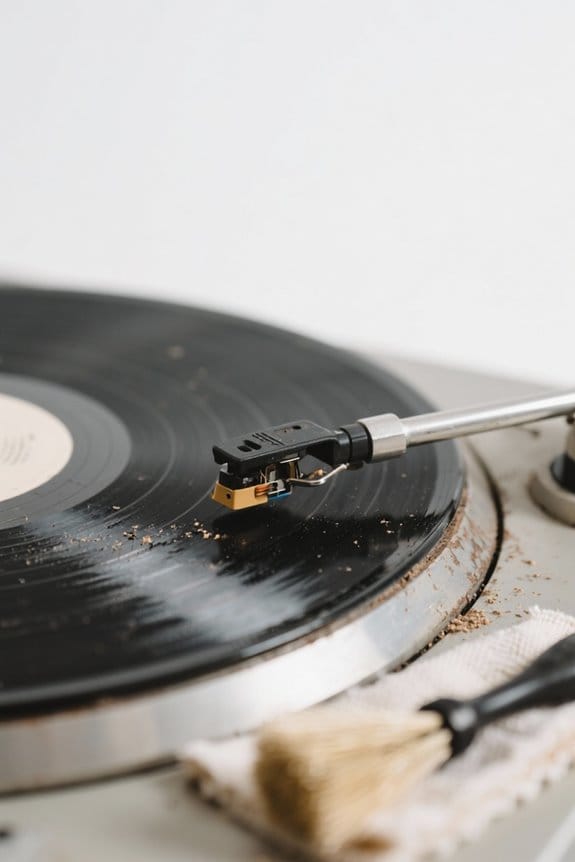
How to Remove Surface Noise From Old Records

To reduce surface noise from old records, start by visually inspecting them for scratches and dust. Clean your records with a solution of 20% isopropyl alcohol and 80% distilled water using a velvet brush, followed by a rinse with distilled water. Make certain your turntable is level and use a quality cartridge for peak sound. For stubborn dirt, consider the wood glue trick. These simple steps can enhance playback quality. Continue to learn more about caring for your vinyl collection.
Key Takeaways
- Regularly clean records using a solution of 20% isopropyl alcohol and 80% distilled water to remove dirt and debris.
- Utilize a velvet record brush with a vacuum for effective debris removal, avoiding cloths that may leave residues.
- Inspect records for scratches and warping, as these imperfections contribute to surface noise during playback.
- Apply the wood glue trick carefully to capture dirt, improving audio clarity when tested on less valuable records first.
- Optimize turntable setup by leveling, choosing a high-quality cartridge, and ensuring correct tracking force to enhance sound fidelity.
Understanding Surface Noise in Vinyl Records
You may be interested


Surface noise in vinyl records can be an unwelcome distraction for listeners. It often arises from manufacturing defects and tracking issues as the stylus navigates groove imperfections. Additionally, dirt and debris can exacerbate these sounds. Remember, vinyl records naturally produce some background noise, unlike digital formats that aim to minimize it. Many factors contribute to surface noise levels, such as the cutting process, stylus profile, and cartridge weight. Furthermore, pressing techniques can vary, with European records typically resulting in quieter playback compared to U.S. presses. To help mitigate surface noise, handle your records by the edges and store them vertically. A clean record offers a better listening experience, so take care of the flip side as well during maintenance. Regular use of high-quality brushes can effectively remove dust and prevent wear, enhancing sound quality and prolonging the life of your vinyl collection.
Assessing Your Record’s Condition

Evaluating the condition of a record is a critical step before attempting any cleaning or restoration. Start by visually inspecting the record for scratches, dust, and debris. These elements can increase surface noise during playback. A preliminary cleaning with a carbon fiber brush can help remove loose particles.
Next, listen carefully for pops or hisses in quiet passages. This can guide your wear patterns analysis. Check for warping by placing the record on a flat surface; warps can seriously disrupt playback. Using a magnifying glass, inspect the grooves for imperfections. These checks aid in understanding the record’s overall condition. Proper collection organization and a good playback environment are essential for preserving your records and minimizing noise. Using ultrasonic cleaning provides a thorough cleaning process without physical scrubbing, which reduces the risk of surface abrasion and effectively removes ingrained dirt and oils from your records.
Recommended Products

HumminGuru NOVA Ultrasonic Vinyl Record Cleaner

SUS304 Stainless Steel Tank: The inner tank of the ultrasonic cleaning machine is made of SUS304 stainless steel, which makes the equipment resistant to weak acids and alkalis, reduces corrosion and prolongs the service life of the product.
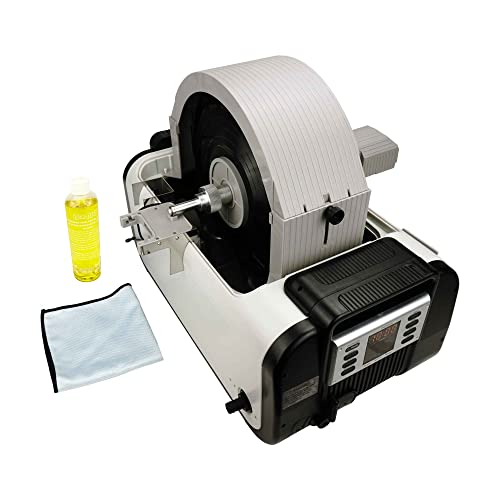
Popular iSonic Ultrasonic Vinyl Record Cleaner fitted with a PRO set of accessories with 1-micron filter and a step motor for cleaning and spin drying.
Effective Cleaning Techniques for Vinyl

Once the record’s condition is assessed, it’s time to move on to effective cleaning techniques. Begin by preparing a cleaning solution with 20% isopropyl alcohol and 80% distilled water. Adding a few drops of Triton X can enhance its effectiveness. Use a velvet record brush alongside a vacuum to lift debris more efficiently than traditional cloths. After cleaning, implement a rinse cycle with plain distilled water to remove any remaining cleaning products. Avoid microfiber towels, as they can leave pesky fibers trapped in the grooves. For heavily used records, consider investing in an ultrasonic cleaner, which operates at 40KHz frequency for thorough dirt removal. This equipment greatly improves the removal of embedded dust and contaminants, ensuring a cleaner listening experience.
Recommended Products

The new model is specifically designed vinyl record cleaning based on what we've learned from the successes of the previous models in the last few yest. It's fitted with a PRO set of accessories with 1-micron filter and a step motor for cleaning and spin drying.

High-Precision 40kHz Ultrasonic Restoration: Engineered with dual transducers and a single-unit closed-loop stainless steel basin for maximum energy efficiency. By maintaining a strict 10mm proximity between the record surface and the basin wall, the 40kHz ultrasonic waves target deep-groove dirt, microscopic dust, and manufacturing release agents with surgical efficiency—all without physical contact.
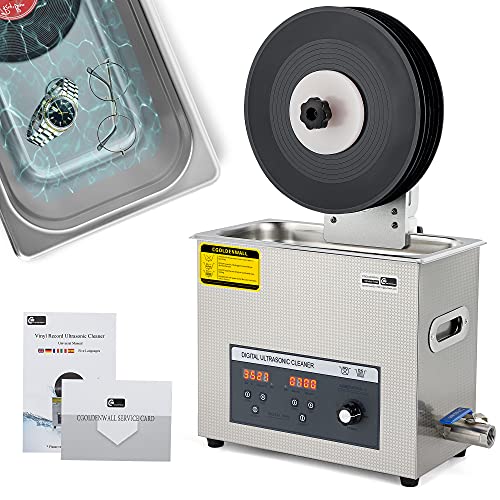
40,000Hz HIGH FRENQUENCY FOR THOROUGH CLEANING- This ultrasonic cleaner has a frequency of 40,000Hz and will not do harm to cleaned products. Ultrasonic vibration can remove minimal dirt from the surface of the object. Therefore, normal brushing or hand tests cannot completely clean the dust and dirt inside the vinyl disc track, but the internal dust and dirt can be shaken with an ultrasonic dishwasher.
Utilizing the Wood Glue Trick

Transforming the sound quality of an old record can be achieved with a clever method known as the wood glue trick. This process involves applying a thin layer of PVA wood glue directly to the record’s surface. Use a clean applicator to spread the glue evenly across the grooves. Allow it to dry for several hours until it forms a solid film. After drying, gently peel off the glue, which captures dirt and debris. Many users appreciate the wood glue benefits, noting clearer audio and fewer ticks. However, it’s wise to perform this alternative cleaning method on less valuable records first. Always consider vinyl safety precautions, as the technique may not be suitable for all records. Using a record roller cleaner is another effective method for removing debris without the risk of damaging valuable vinyl records.
Recommended Products

Industrial Strength Formula: Polyurethane adhesive that doesn't require mixing and is 100% waterproof for reliable bonding performance


Acid-free neutral pH PVA adhesive
Optimizing Your Turntable Setup
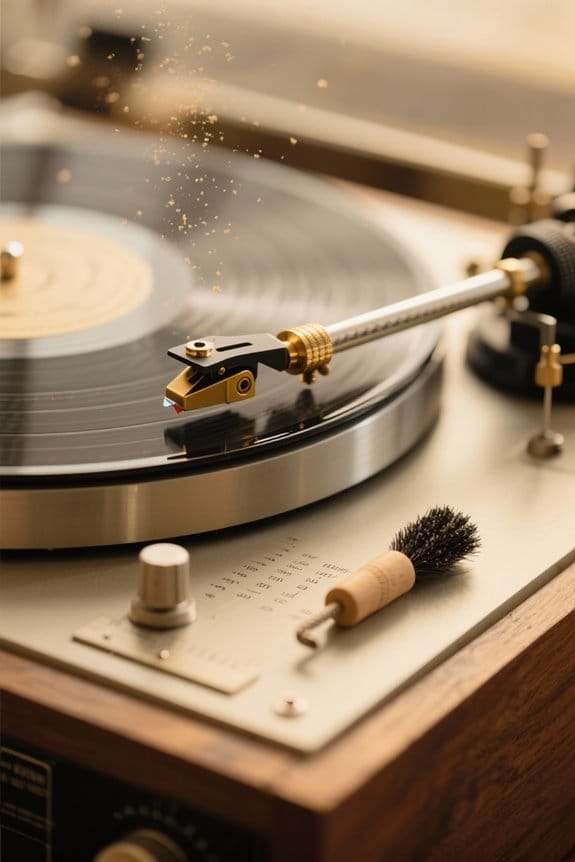
After using the wood glue trick to enhance record clarity, the next step involves optimizing the turntable setup. First, make certain of proper turntable leveling. An uneven surface can cause tracking errors and increase surface noise. Use a bubble level to check if your turntable is flat.
Next, focus on cartridge optimization. Choose a high-quality cartridge and set the correct tracking force based on your record type. This helps improve sound fidelity and minimizes noise.
It is also important to consider the frequency response range of your audio equipment, as a range between 10 Hz to 40 kHz allows for detailed audio reproduction.
Lastly, pay attention to preamp quality. A good phono preamp greatly boosts playback quality and reduces unwanted noise. Investing in these areas makes sure of a smoother listening experience, allowing you to enjoy your favorite records with clearer sound and fewer distractions.
Recommended Products

PURE ANALOG PERFORMANCE - The definitive vinyl record listening experience for beautifully warm and natural music, transporting you into the center of the performance

VOTED BEST TURNTABLE BY NEW YORK TIMES WIRECUTTER - "This turntable delivers an accurate sound that works great for any type of music, and it's exceptionally well built for the price."

PURE ANALOG PERFORMANCE - The definitive vinyl record listening experience for beautifully warm and natural music, transporting you into the center of the performance
The Role of Stylus Maintenance
Maintaining a clean stylus is vital for preserving sound quality when playing old records. Regularly clean your stylus with a specialized brush or cleaning solution. This simple step helps improve tracking performance and reduces surface noise. Keep in mind that different stylus types, like elliptical or microlinear, affect how well the stylus traces grooves. Also, make sure to check the tracking force—this adjusts how much pressure the stylus applies to the record. Proper alignment techniques are important too; they help minimize damage to the grooves. Remember, a finer-tip stylus can enhance contact with the groove walls, leading to crisper sound. High-quality carbon fiber bristles are effective in dust removal, maintaining the stylus’s condition and ensuring optimal audio performance. Replace a worn stylus based on the manufacturer’s recommended hours for ideal playback quality.
Recommended Products

Product 1: Direct-drive, low noise motor

COMPLETE BUNDLE INCLUDES: Ortofon Concorde MkII Club CC Twin Cartridges & Styli with Flight Case Bundle w/ Liquid Audio Fiber Carbon Brush and Liquid Audio Polishing Cloth, to ensure your DJ setup is well-equipped and maintained

Integrity HiFi TRU-SWEEP (Small)
Long-term Preservation of Records
Preserving old records for the long term requires careful storage and handling. Store records vertically in a cool, dry place, away from direct sunlight and heat sources. This helps prevent warping, ensuring sound quality is maintained. Use record storage solutions like sturdy crates or shelving to support their weight without causing pressure points. Invest in protective coverings, such as high-density polyethylene (HDPE) outer sleeves, to safeguard album covers and protect the vinyl from dust and scratches. Regularly clean records with an anti-static cloth and cleaning solution to keep them in excellent condition. Avoid touching the grooves; handle records by the edges to prevent fingerprints, which can lead to noise during playback. Additionally, participating in social media communities can provide valuable insights and tips on maintaining record collections.
Frequently Asked Questions
How to Fix Surface Noise on Vinyl?
To fix surface noise on vinyl, employ effective vinyl cleaning techniques, utilize proper record preservation methods, and follow needle maintenance tips. Balancing these approaches guarantees the cherished sound quality while minimizing unwanted interference during playback.
How to Get Rid of Static on Old Records?
To get rid of static on old records, one should utilize anti-static solutions, conduct thorough vinyl cleaning, and prioritize proper record maintenance, ensuring that records remain free from dust and static buildup for ideal playback quality.
How Can You Remove Background Noise From a Recording?
To remove background noise from a recording, employing audio restoration techniques such as digital noise reduction and chronic noise removal can effectively enhance sound quality, providing clearer audio through precise editing and filtering methods.
Is Windex Ok for Vinyl Records?
Is Windex truly suitable for vinyl records? Experts strongly advise against it, recommending specialized record cleaning solutions or gentle DIY cleaning methods instead; following these vinyl maintenance tips preserves sound quality and prevents deterioration over time.


