As an Amazon Associate, we earn from qualifying purchases. Some links on this site are affiliate links at no extra cost to you. Our recommendations are based on thorough research and editorial judgment.


Why Vinyl Has That Distinct Warm Sound

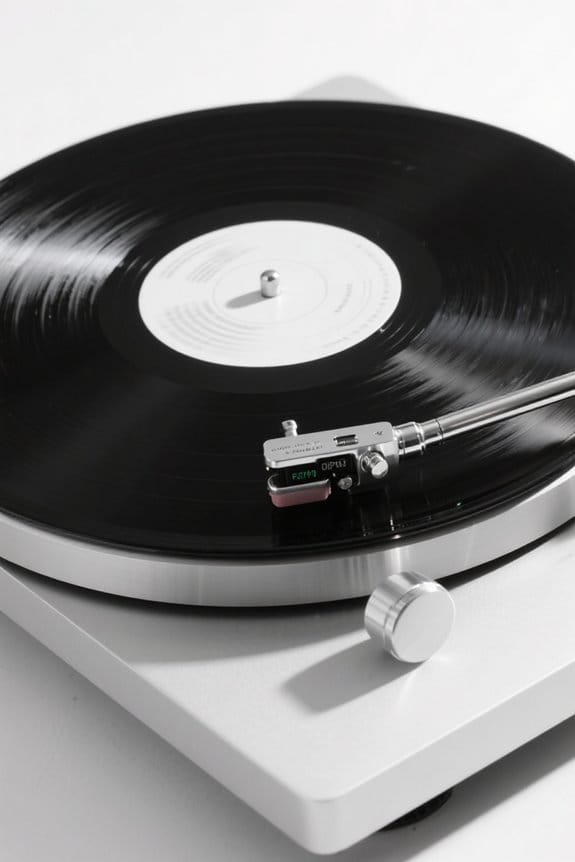
Vinyl records have a distinct warm sound because of their analog nature and physical grooves. These grooves capture sound waves, with their width affecting frequency and depth impacting loudness. The continuous playback offers a rich audio flow, enhancing details. Mastering for vinyl guarantees the right balance, avoiding too much compression. Quality turntables and styluses also contribute to sound clarity. With proper care, listeners can enjoy this warm audio experience. There’s more to explore about what makes vinyl unique.
Key Takeaways
- Vinyl records use grooves that capture sound waves in a continuous signal, preserving audio details and producing a warmer sound quality.
- The width and depth of grooves influence frequency and amplitude, allowing for a richer audio experience with broader dynamic range.
- Mastering techniques tailored for vinyl maintain audio fidelity by avoiding excessive compression and enhancing warmth through analog signals.
- High-quality turntables and cartridges ensure stable playback, while proper tracking force and stylus shape contribute to clarity and warmth in sound.
- Subtle mechanical imperfections in vinyl playback, like wow and flutter, add an organic quality that enriches the overall listening experience.
The Analog Advantage: How Vinyl Captures Sound
You may be interested


When exploring how vinyl records capture sound, it’s important to understand the physical characteristics involved. Vinyl uses grooves to reflect sound waves, allowing for a more accurate representation of audio. The width of these grooves determines frequency, while their depth affects amplitude. Unlike digital formats, vinyl provides a continuous signal playback, which helps preserve subtle audio details. This results in richer, warmer sound quality. The RIAA equalization curve further enhances playback by maximizing full-frequency music and improving clarity. Vinyl records typically hold a dynamic range between 55-70 dB, which can outperform some digital formats. Proper mastering techniques, like avoiding excessive compression, also play an essential role in maintaining the vinyl’s analog sound, ensuring warmth and detail remain intact. Additionally, using stereo receivers with appropriate power output and connectivity options can enhance the vinyl listening experience by ensuring optimal sound quality and compatibility with various audio setups.
The Grooves of Warmth: Understanding Vinyl’s Design
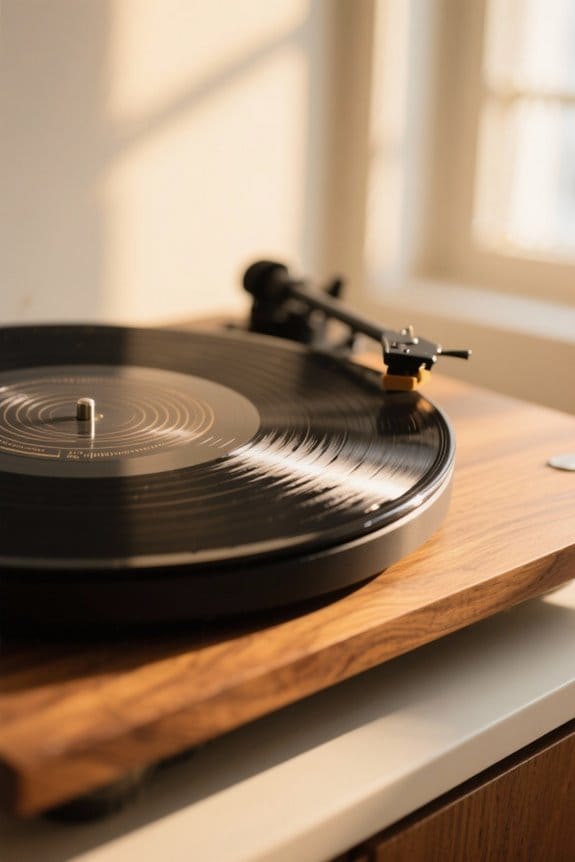
Understanding vinyl’s design begins with recognizing how its grooves create that signature warm sound. These carefully carved grooves encode sound. Their width varies: narrow grooves capture high frequencies, while wider grooves handle low tones. This design allows playback that sounds warmer compared to digital formats.
When the stylus tracks these grooves, it generates mechanical vibrations, closely mirroring the original sound wave’s dynamic range. This continuous waveform playback enriches details, enhancing the overall listening experience.
Additionally, the quality of the vinyl material matters; virgin vinyl typically yields better results than recycled. The anti-static properties of carbon fiber brushes can also reduce electrical buildup on vinyl surfaces, minimizing playback noise issues. Finally, remember that the condition of the record greatly impacts warmth and clarity. With these insights, anyone can appreciate why vinyl sounds warmer and richer than digital counterparts.
Mastering for Vinyl: Techniques That Enhance Sound Quality

Mastering for vinyl requires a thoughtful approach, as even small adjustments can impact sound quality considerably. Engineers start by adjusting equalization (EQ) to address vinyl’s physical limits, ensuring a balanced sound. Pay close attention to how grooves transform during this process; excessive compression can distort audio fidelity. The depth and spacing of grooves play critical roles in capturing sound. Higher frequencies need tighter spacing to maintain clarity. Keep a broad dynamic range, emphasizing the warm sound that makes vinyl records special. Using analog master tapes is also beneficial. They preserve subtle details better than digital versions, enhancing overall warmth. These techniques help produce richer audio quality, ensuring a satisfying listening experience on vinyl. It is important to consider cartridge specifications as they can either reveal or mask imperfections in records, significantly affecting the overall audio fidelity.
The Role of Turntables and Equipment in the Vinyl Experience

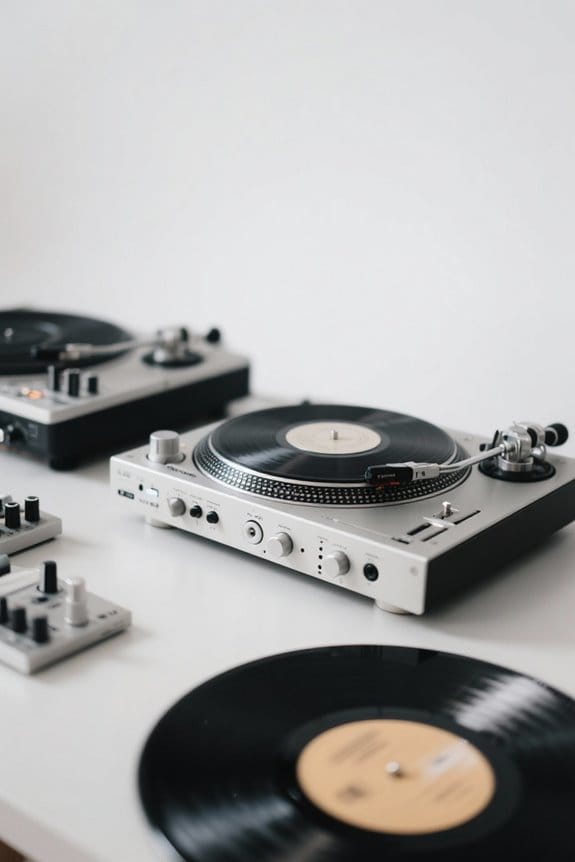
Quality turntables play a critical role in the vinyl listening experience. A high-quality record player minimizes issues like wow and flutter, leading to a more stable dynamic sound. The stylus shape and material also impact frequency response. Consider investing in finer stylus shapes that provide better groove tracking for clearer playback. Properly adjusting the tracking force is essential too; it helps the stylus maintain ideal pressure on the record, enhancing sound clarity without causing damage. The cartridge, which converts mechanical vibrations into electrical signals, is equally important. High-quality materials like resonance-optimized wood or aluminum can enhance sound clarity and improve the overall listening experience. Finally, regular maintenance—like cleaning the stylus—ensures the warmth of vinyl sound is preserved. Following these tips will elevate your listening experience and deepen your appreciation for vinyl records.
Recommended Products
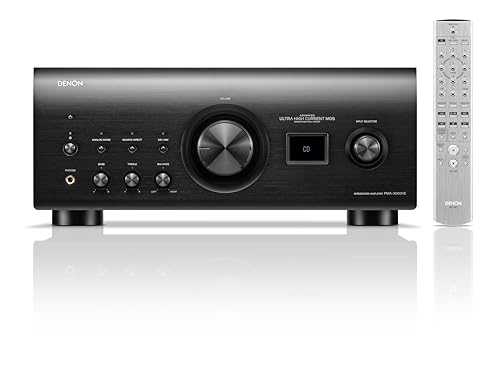
HIGH-PERFORMANCE INTEGRATED AMPLIFIER - The Denon PMA-3000NE 2 Channel Amplifier Home Audio, tuned by Denon's Sound Master Shinichi Yamauchi, delivers 80W/Ch at 8 ohms (160W/Ch at 4 ohms), ensuring accuracy & low distortion to enhance your home audio

VINYL MAKES A MAGNIFICENT COMEBACK – The warmth of analog music supersedes all digital forms. Marantz brings alive the old school charm with its Reference Series TT-15S1 Turntable (33 1/3 & 45 rpm) – an absolute stunner for your treasured albums

REDISCOVER YOUR PASSION FOR VINYL - Listen to your analog music in a brand new way with this rigid diecast aluminum vinyl turntable that comes with standard mount headshell, S-shaped tonearm, direct drive motor, and has rotation speeds of 33 1/3, 45, or 78 rpm
Unique Characteristics of Vinyl Playback

Vinyl playback is known for its unique sound qualities, which many enthusiasts cherish. This medium captures the original sound through grooves, providing a continuous and smooth audio flow. As the stylus tracks these grooves, it introduces subtle distortions, enriching the warmth of the music without being overly harsh. The RIAA equalization curve plays a role here. It boosts high frequencies while softening low frequencies, impacting the tonal balance. Typically, vinyl records have a dynamic range of 55-70 dB, lower than digital formats, yet this can create a fuller listening experience. Though mechanical imperfections like wow and flutter might seem troublesome, they can add an organic quality that many listeners enjoy, enhancing the warmth of the sound overall. Additionally, some Bluetooth record players offer high-resolution audio streaming to further enhance sound quality for serious music enthusiasts.
Building a Vinyl Collection: Focusing on Quality and Sound
Assembling a vinyl collection can be an exciting journey filled with discovery and enjoyment. Focus on selecting albums with historical significance and outstanding audio quality, especially in genres like jazz and classical music. Albums like Pink Floyd’s *The Dark Side of the Moon* and Miles Davis’ *Kind of Blue* are excellent choices. Look for limited edition pressings and colored vinyl, which can be visually appealing and may appreciate in value. Maintain your records and turntable regularly by cleaning them and adjusting the tracking of your playback stylus. Remember, using virgin vinyl enhances sound quality, delivering a richer experience than most digital recording samples. This attention to detail guarantees you enjoy every note from your growing collection. For those interested in enhancing their listening experience, consider turntables with built-in phono preamps, which allow for easy connectivity without additional equipment.
Recommended Products



Frequently Asked Questions
Why Does Vinyl Sound Warmer?
Vinyl sounds warmer due to its analog characteristics, listener perception influenced by recording techniques, and the preservation of musical nuances. Each element combines to create a richly textured auditory experience that resonates deeply with audiophiles.
Is Vinyl Warmer Than Digital?
Vinyl is often considered warmer than digital due to its analog characteristics, which enhance sound reproduction. This format’s frequency response and inherent harmonic distortion contribute to a richness perceived as lacking in digital audio formats.
Why Does Vinyl Sound so Different?
Vinyl’s sound differs remarkably as it evokes a warm embrace of analog fidelity, contrasting sharply with digital sound compression. This rich medium crafts a unique listening experience, inviting listeners to savor every nuanced detail and emotion in music.
What Makes Audio Sound Warm?
Audio sounds warm due to analog richness, which enhances sound frequencies and musical dynamics. This richness allows for a fuller representation of audio detail, resulting in a pleasurable and immersed listening experience that resonates with many.