As an Amazon Associate, we earn from qualifying purchases. Some links on this site are affiliate links at no extra cost to you. Our recommendations are based on thorough research and editorial judgment.


Common Causes of Record Skipping

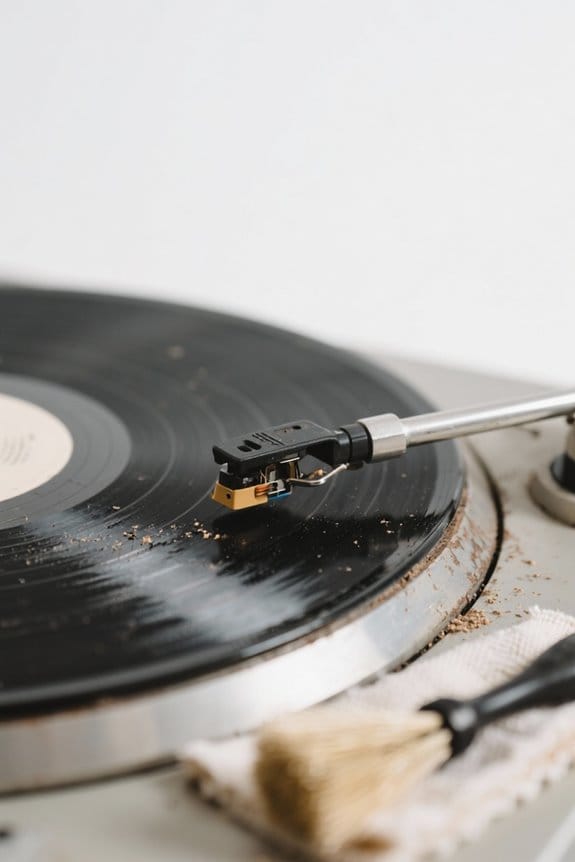
Common causes of record skipping include dust buildup, a worn stylus, and improper tracking force. Regularly clean your records with an anti-static brush. Make certain your stylus is in good condition; replace it if it has over 700-800 hours of use. Check your tracking force, ideally around 1.5 grams, and adjust as needed. Finally, verify your turntable is stable to avoid vibrations. There’s more on how to prevent these issues effectively.
Key Takeaways
- Dust and debris on the record surface can hinder stylus tracking, leading to skipping during playback.
- A worn or damaged stylus can cause the stylus to jump out of grooves, resulting in playback issues.
- Insufficient or excessive tracking force may prevent proper groove engagement, resulting in skipping or damaging both the stylus and record.
- Warped records due to improper storage or temperature can cause consistent skipping and distortions when played.
- Scratches on the record can interrupt stylus tracking, causing momentary or consistent skips during playback.
Understanding the Mechanics of Vinyl Records
You may be interested
Vinyl records operate on a fascinating principle of sound reproduction. The grooves on a record contain tiny variations that the stylus, or needle, follows to create sound. This precise tracking is essential; even a speck of dust can cause the stylus to skip, leading to audio distortion. Proper tracking force plays an important role. If the stylus applies too much pressure, it could damage the grooves; too little can prevent it from fully engaging. Regularly clean your records to remove dust, and verify the stylus is aligned correctly. Anti-static features minimize unwanted noise during playback and help preserve sound quality by removing surface dust and grime. Adjust your record player’s tracking force according to the manufacturer’s guidelines for peak performance. Understanding these mechanics helps prevent playback issues, allowing you to enjoy your vinyl collection without interruption.
Common Causes of Vinyl Record Skipping

Several common issues can cause a vinyl record to skip during playback. Dust and debris on the record surface impede the stylus’s tracking ability. Regular stylus cleaning can help avoid this problem. Additionally, check the tracking force; an ideal setting is typically around 1.5 grams. If the tonearm is unbalanced, it may disengage, leading to skips. Worn or damaged styluses may also fail to follow grooves properly, so consider replacing one after 700-800 hours of use. Warped records, often caused by heat or improper storage, misalign the stylus and cause consistent skipping issues. A stable and vibration-free surface, such as using turntable isolation platforms, can enhance playback quality. Finally, confirm your turntable is on an even surface and adjust the anti-skate setting for smooth playback and to minimize those irritating skips.
The Impact of Dust and Debris

Dust and debris pose significant challenges for vinyl record enthusiasts. These tiny particles can accumulate in the grooves, hindering the stylus’s ability to track the record properly. Even a small amount of dust and dirt can cause the stylus to skip, disrupting playback. To maintain sound quality, regular cleaning is crucial. Using an anti-static carbon fiber brush before each play can effectively remove surface dust, minimizing the risk of skipping. Remember that oils from fingers can attract even more dust, further complicating the issue. A specialized cleaning kit can also help in deep cleaning your records. Keeping your vinyl clean will guarantee smoother playback and a better listening experience. Always take preventative measures to protect your cherished records. Regular cleaning with quality brushes helps protect the integrity of vinyl records while reducing surface noise and extending their lifespan.
Recommended Products

Superior 2-in-1 Cleaning: This dual-action vinyl record cleaner brush uses carbon fibre bristles to remove stubborn dust and debris, while a soft velvet layer lifts away fine particles.

Clean and protect your vinyl collection — Our vinyl record brush quickly and easily cleans your records before every spin. Dual-row extra-soft carbon fiber bristles gently lift harmful dust and dirt from the vinyl surface. No vinyl cleaner liquids or gels required.

High-Quality Beechwood Handle: Our record cleaning brush features a high-quality beechwood handle, offering a luxurious look as well as exceptional durability. The wooden handle provides a comfortable grip, ensuring you can easily control the brush during the cleaning process.
Assessing Stylus Condition

While enjoying your record collection, it’s important to keep an eye on the condition of the stylus, as it plays an essential role in sound quality. A worn or damaged stylus can lead to skipping records and poor playback quality. Typically, diamond styli need replacing after 700-800 hours, while ruby ones last about 200 hours. To avoid playback issues, regularly clean your records and the stylus. Use a stylus brush with gentle pressure to remove dirt without causing damage. Regular cleaning with anti-static fibers helps maintain optimal sound and extends the life of your equipment. This proper maintenance helps the stylus read grooves accurately, reducing the risk of skipping. Always follow the manufacturer’s instructions for installing and replacing the stylus to guarantee ideal performance and longevity.
Importance of Proper Tracking Force

Proper tracking force is a key factor in achieving great sound quality from vinyl records. It helps the stylus maintain contact with the record grooves, preventing skipping vinyl and distortion. The recommended tracking force typically ranges from 1.5 grams to 2.5 grams, so always check your cartridge guidelines. Insufficient force can cause the stylus to jump out of grooves, while excess pressure might harm both the stylus and the record. To guarantee optimal stylus performance, monitor and calibrate tracking force regularly. Adjusting the anti-skate setting complements tracking force and helps keep the stylus steady. By taking these steps, listeners can considerably improve their enjoyment and preserve their records for years to come. Durability and sound quality are key for an enjoyable vinyl experience at a reasonable price.
Recommended Products

A Professional digital stylus tracking force scale designed for vinyl record purist's interested in precise measurement of vertical tracking force (VTF) at the correct vertical tracking angle (VTA). When used with the detachable cantilevered extension arm, the scale closely approximates the vertical position of the stylus on the surface of a vinyl record when it is playing on a turntable - providing accurate “record-level” measurements.
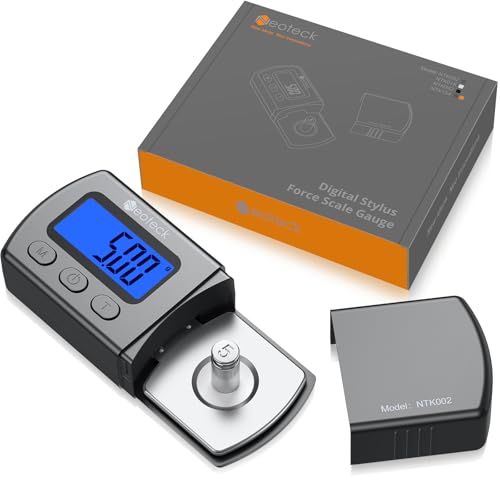
Essential Tool for Vinyl Enthusiasts: For those dedicated to the art of vinyl playback, this cartridge tracking force scale is indispensable.It ensures optimal sound quality and protects your valuable records and turntable investment.Neoteck tracking force gauge accurately measures the tracking force or downward pressure, ensuring the protection of your vinyl collection, precise sound reproduction and prolonged turntable lifespan

High Precision Stylus Gauge Accurate to 0.01g for Perfect Stylus Force Adjustment
The Role of Anti-Skate Settings
Adjusting the anti-skate setting on a turntable is essential for a smoother listening experience. This setting counteracts the inward force pulling the stylus toward the record’s center. If misadjusted, it can cause uneven wear on the stylus and vinyl, leading to skipping during playback. Begin by setting the anti-skate equal to the tracking force applied by the tonearm, often around 1.5 grams for many cartridges. This helps maintain ideal contact between the stylus and the groove. Some advanced turntables may have finely tunable anti-skate mechanisms for added precision. Modular storage units can be customized for aesthetic appeal and organization, enhancing the listening area for vinyl enthusiasts. Take the time to adjust properly. With the right anti-skate setting, listeners can enjoy their vinyl without interruption or distortion. Happy listening!
Evaluating Record Warping
Warped records can be a frustrating issue for vinyl enthusiasts. Record warping can happen due to high temperatures or improper storage. This can cause skipping as the needle fails to track the grooves correctly. A warped record may sit unevenly on the turntable, leading to distortion and lower sound quality. Inspect your vinyl records regularly for warping, looking for any noticeable curves. When discovered, try using a record flattener for mild warping. For severe warping, options may be limited, and the record could be deemed unplayable. Proper storage is vital. Keep records upright in a cool, dry location to prevent further damage. By caring for your records, you can maintain their playability and overall listening experience. Consider using a record weight stabilizer to improve stability and reduce vibrations, enhancing the sound quality of your vinyl collection.
Surface Issues Affecting Playback
A clean vinyl record is essential for an enjoyable listening experience. Surface issues like dust and debris can prevent the stylus from tracking the grooves correctly, leading to skipping. Regularly using a proper cleaning solution can help maintain a record’s surface, removing oils and fingerprints that cause friction. Even tiny scratches on a scratched record can obstruct the needle’s path. Additionally, warped records can misalign grooves, causing continual skipping. To fix these problems, gently clean the record with a microfiber cloth and guarantee it is stored in a cool, flat area. Keep your turntable stable, too. A balanced surface helps minimize vibrations, allowing your stylus to maintain its grip and deliver crisp, uninterrupted sound. It’s recommended to use alcohol-free solutions for cleaning to avoid damaging the delicate vinyl surfaces.
How Turntable Stability Affects Sound
Surface issues affecting records are only part of the puzzle; turntable stability plays a major role in sound quality. An unstable turntable can create unwanted vibrations that lead to skipping during playback. To achieve ideal sound reproduction, make certain the turntable sits on sturdy furniture or a wall-mounted shelf. Avoid soft surfaces that can amplify vibrations. Use a bubble level to check your turntable’s alignment; this is essential for proper stylus alignment. A balanced setup helps maintain contact between the stylus and the record groove, reducing skipping. Remember, even bass-heavy speakers can disrupt tracking, so keep them at a distance. By prioritizing turntable stability, you can enhance your listening experience markedly. Additionally, consider the ALL-ANALOG mastering process to ensure your records maintain high audio fidelity, as it is a significant factor in the overall sound quality.
The Effects of Environmental Conditions
While many may focus on the turntable itself, environmental conditions also greatly influence record playback. High humidity can cause mold growth, leading to obstructions in grooves and resulting in skips. Likewise, excessive dust can settle on vinyl records, which compromises playback quality. It’s important to keep your records clean and stored properly. Extreme temperature changes can cause warping, making it difficult for the stylus to maintain contact with the groove. Additionally, vibrations from loud speakers or heavy foot traffic can disrupt turntable stability, causing the needle to bounce. To protect your collection, store records away from direct sunlight and maintain a stable environment. A little attention to these factors can greatly enhance your listening experience. Incorporating ceremonial music pieces into your listening routine can also provide a rich auditory experience, enhancing the overall enjoyment of your collection.
Inspecting for Scratches and Damage
Maintaining the quality of vinyl records goes beyond environmental conditions; inspecting for scratches and damage is equally important. Scratches can disrupt playback, causing the stylus to skip over grooves. Tiny surface abrasions may only induce momentary skips, but deeper scratches can consistently ruin sound quality. To detect these flaws, carefully inspect records under bright light to highlight any visible scratches. Regular checks are necessary, especially for used records, as even minor blemishes can impair playback performance. Remember, records often acquire scratches from improper handling, such as placing them on abrasive surfaces or using unsuitable cleaning tools. By taking the time to assess for damaged records, one can better maintain their cherished vinyl collection.
Preventative Measures for Record Care
To keep vinyl records in excellent condition, implementing preventative measures is essential. Store records vertically in a cool, dry place at room temperature. This prevents warping and damage from pressure or humidity. Always use inner and outer protective sleeves to shield against dust and scratches. When handling records, grip them by the edges or labels to avoid touching the grooves. This keeps oils and fingerprints from degrading the vinyl surface. Regular cleaning with a carbon fiber brush or a record cleaning kit before and after each play minimizes dust buildup. Additionally, maintain your turntable setup by checking the tracking force and anti-skate settings, ensuring the needle engages correctly to reduce the risk of skipping during playback.
Frequently Asked Questions
What Is Causing My Record to Skip?
Like a dancer struggling to find the beat, a record skips due to needle misalignment, improper turntable setup, insufficient record cleaning, temperature effects, weight distribution issues, cartridge malfunctions, or defects within the grooves.
Why Is My Recording Skipping?
Vinyl care, needle maintenance, and proper turntable setup greatly influence sound quality. Skipping may occur due to poor groove alignment, inadequate record storage, or suboptimal speaker placement, all impacting playback enjoyment and performance.
Why Is My Vinyl Skipping but No Scratches?
Vinyl may skip despite flawless grooves when dust accumulates like a stubborn fog, turntable quality falters, or tracking force misaligns. Mastering cleaning techniques becomes essential for stellar performance and ensuring that cherished melodies flow uninterrupted.
Is It Normal for a Brand New Vinyl to Skip?
Experiencing skips with brand new records can occur unexpectedly due to vinyl quality issues, inadequate player setup, improper needle pressure, or dust particles. Regular record maintenance, including adjusting tracking force, is recommended to mitigate such problems.