As an Amazon Associate, we earn from qualifying purchases. Some links on this site are affiliate links at no extra cost to you. Our recommendations are based on thorough research and editorial judgment.

Digital Vs Analog: Understanding the Debate

Digital and analog technologies offer different sound qualities and experiences. Analog sound is continuous, providing a warm richness, but can degrade over time. Digital sound uses binary code for clearer, more accurate playback that does not wear down. Digital formats allow convenient access to extensive music libraries, while analog formats provide a tangible, tactile experience. Each has unique pros and cons, affecting preservation and sound quality. Explore further to uncover more insights into this fascinating debate.
Key Takeaways
- Analog signals provide smooth, continuous sound, while digital signals use binary code, resulting in discrete and more precise audio representation.
- Vinyl records offer a warmer sound with rich nuances, but are prone to wear and quality degradation over time, unlike digital formats.
- Digital audio formats boast higher dynamic ranges (over 90 dB) and superior clarity, maintaining quality even after repeated playback.
- Modern consumption trends favor the convenience of digital streaming, yet many audiophiles still cherish the tactile and emotional experience of vinyl.
- Technological advancements bridge the gap, allowing turntables to integrate Bluetooth connectivity, merging traditional analog listening with modern digital convenience.
Overview of Analog and Digital Signals
You may be interested
When exploring the differences between analog and digital signals, it’s helpful to visualize how each operates. Analog signals are smooth and continuous, varying over time like sound waves. They can represent an infinite number of values within a range. Imagine each sound wave as a flowing curve on a graph. In contrast, digital signals break information into discrete pieces, using binary code (0s and 1s) for representation. These show up as stepped waveforms on a graph. To convert analog signals to digital, an Analog to Digital Converter (ADC) is used, while a Digital to Analog Converter (DAC) performs the reverse. Understanding these differences can clarify why digital signals often offer better accuracy and resilience against noise and interference. Proper storage and maintenance are essential for preserving the quality of analog media like vinyl records over time, ensuring they remain in excellent condition for collectors and audiophiles alike.
Characteristics of Analog and Digital Sound

The characteristics of analog and digital sound reveal important differences in how we experience audio. Analog sound uses continuous waveforms, capturing rich nuances from performances, typically found on vinyl. This often leads to a “warm” tonal quality that many appreciate. However, it does have disadvantages, such as susceptibility to dust and physical degradation over time, which affects fidelity. Digital audio, in contrast, converts sounds into discrete numerical samples, producing a cleaner, more precise reproduction. Despite sounding somewhat “cold,” digital formats like CDs boast over 90 dB dynamic range, outpacing analog’s 70 dB. This clarity makes digital audio more reliable for consistent playback, showcasing both the advantages and disadvantages of these sound types. Modern sequencers often integrate both digital and analog sound design features, offering users the flexibility to explore a wide range of audio characteristics.
Quality of Sound and Playback Characteristics

Quality in sound and playback characteristics greatly influences how audio is perceived. Vinyl records, or analog signals, deliver a dynamic range of about 70 dB, while CDs, which use digital recording, exceed 90 dB. This higher dynamic range results in superior quality of sound for digital formats. Analog sounds are continuous waves that can degrade, causing distortion over time. In contrast, digital signals maintain their clarity, thanks to square waves. When playing records, dust can create annoying crackles, while CDs read data with lasers, eliminating this issue. Channel separation is another point; CDs offer over 90 dB, providing clearer audio than the 30 dB maximum for LPs. Turntable care and maintenance are crucial for optimal performance and longevity of vinyl records. Understanding these differences can help listeners choose what suits their preferences best.
Recommended Products

VINTAGE LOOKING&GREAT IDEA OPTIONS - As a music player combined age and modern sense, A vintage and fashion style record player is a great idea for your loving family and friends at all festivals. No matter to awake a good time in memory, start an elementary musical education, or just prepare a birthday surprise

【Retrolife INDIVIDUAL SUITCASE RECORD PLAYER】A satisfying combo of modern and vintage elements. Black classic PU leather outlook with retro bronze metal screws and nets, you can take it everywhere with its solid handle. Be ready to create your own music memories

【Vintage Record Player】Bluetooth Input & AUX Audio input & RCA line-out & Headphone jack. 2 Built in stereo speakers,with Bluetooth wireless technology,elegantly listen to the music from your smart phone.Use Aux cable input to directly play the music. Or enjoy your time with headphone. For better or louder sound, connect external speaker via RCA cable.
Preservation, Longevity, and Durability

Audio formats come with varying levels of preservation, longevity, and durability. Vinyl records, a popular analog medium, can wear down after repeated playings. This degradation may greatly affect high frequencies over time. In contrast, digital files maintain their sonic integrity, quality, and durability, even after endless plays. Compact discs, known for their reliability, can preserve sound quality unless exposed to extreme conditions. Additionally, perfect copies of CDs can be made without losing any quality. Unlike vinyl, digital formats are less vulnerable to dust and physical damage. Heat and friction can deform vinyl, impacting its lifespan. Using ultrasonic cleaning technology can help preserve the sound quality of vinyl by effectively reaching small debris in record grooves while preserving the integrity of the record. For those new to audio formats, digital may seem the better choice for lasting preservation and durability.
Recommended Products
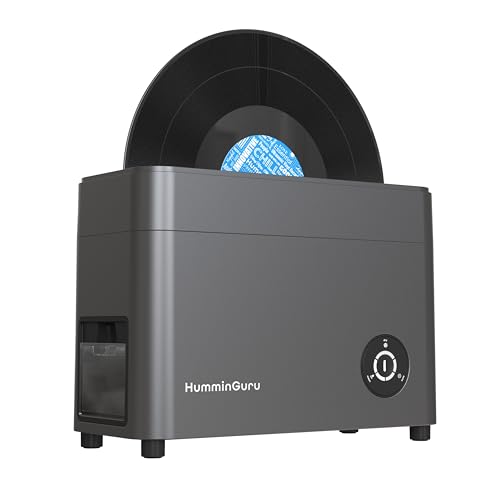
Audiophile-Safe 40kHz Ultrasonic Vinyl Record Cleaner: Engineered with dual transducers and a single-unit closed-loop stainless steel basin for maximum energy efficiency. With a precisely calibrated ratio of power, frequency, and 10mm proximity distance, it ensures maximum deep-groove dirt removal with zero risk of record damage. Acclaimed by leading audio publications and trusted by thousands of vinyl collectors worldwide, it delivers safe, contactless lp cleaning for long-term record preservation.
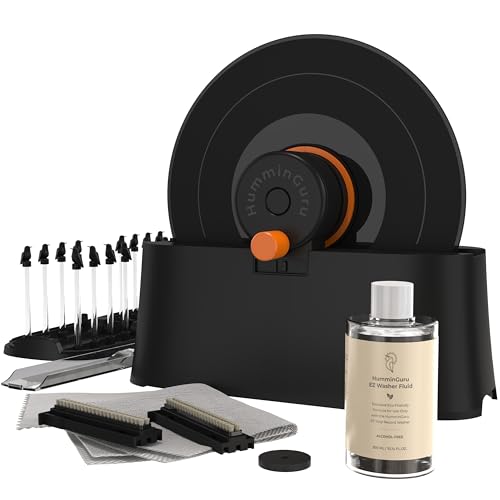
【Watertight Label-Protecting Clamp】: EZ record washer with the record patented clamp secures your vinyl record in seconds with a simple, straight-down press, ensuring zero handling damage. The record clamp interior is lined with a ring of soft, that creates a reliable waterproof seal to keep your record labels perfectly dry during wet cleaning. This innovative design has refined the way you secure your vinyl records from traditional manual washers.
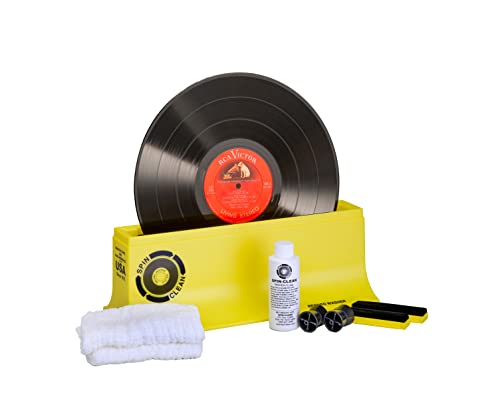
Effortless & Quite Dual-Sided Deep Cleaning: Clean both sides of your vinyl records simultaneously with ease. The vinyl record cleaner operates without power or complex installation, offering a quieter alternative to motorized vacuum systems, perfect for home record cleaning.
Convenience, Accessibility, and Cultural Trends

How accessible are today’s music options compared to the past? Modern digital formats offer unprecedented convenience, enabling users to store extensive music libraries and stream songs at any time. This accessibility expands choices, allowing listeners to explore diverse genres and artists. Streaming services have become the norm, catering to personal preferences and reshaping cultural trends in music consumption. Notably, surveys show that 41% of vinyl owners don’t actively use turntables, highlighting a gap in analog practicality. Some believe the 2010s produced lackluster pop music, prompting nostalgia for earlier eras. While vinyl fosters a sense of ritual with physical artwork, digital formats prioritize ease. Consequently, balancing convenience and cultural appreciation remains essential for today’s music enthusiasts. Additionally, Bluetooth connectivity in modern vinyl record players bridges the gap between analog and digital, allowing seamless integration with digital devices.
Ritual vs. Practicality in Music Listening
While many music lovers enjoy the thrill of listening to their favorite albums, the choice between vinyl and digital formats often comes down to the balance of ritual and practicality. Vinyl records create a ceremonial experience, encouraging listeners to physically engage with the medium. Handling records and absorbing album art enhances the ritual of music listening, making it a special event. On the other hand, digital formats offer unmatched convenience. Listeners can access vast catalogs instantly and play music anywhere, without the physical limitations of vinyl. Notably, 41% of vinyl buyers own records but do not use turntables, reflecting how some appreciate the nostalgia while still finding digital listening more practical for daily use. A significant consideration for enthusiasts is the high-fidelity audio capabilities that refurbished record players can offer, making it a viable option for those seeking quality sound on a budget.
Signal Conversion: ADC and DAC
Vinyl records and digital formats offer unique experiences in music listening, but they both rely on the same fundamental technology for sound reproduction. An Analog to Digital Converter (ADC) takes continuous analog signals and converts them into a digital format. It does this by sampling the analog signal and encoding it into a binary stream. The resolution of an ADC, measured in bits, influences how accurately the analog signal is represented. Conversely, a Digital to Analog Converter (DAC) reverses this process. It transforms digital data back into a continuous analog signal. DAC resolution also matters; higher resolution produces outputs closely resembling the original analog input. Together, ADCs and DACs bridge the gap between our beloved analog signals and modern digital systems. For those exploring turntable options, consider the benefits of using a phono preamp to enhance sound quality and achieve optimal performance with various cartridges.
Recommended Products
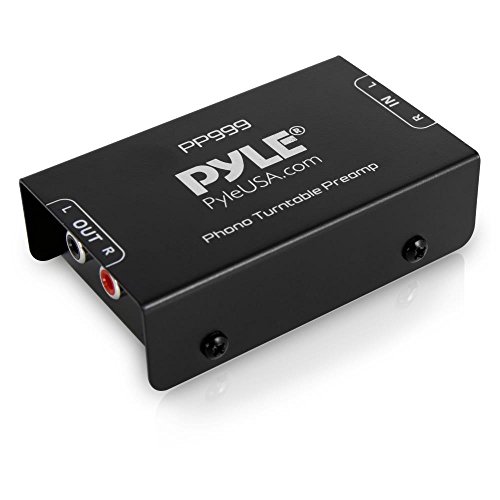
Converts phono signals: a turntable preamp that converts phono signals to line level signals. This state-of-the-art circuitry phono preamp can accommodate magnetic pickups with an input sensitivity of 3mV at 50K ohms

Flagship Desktop DAC: A fully balanced digital-to-analog converter preamp with multiple inputs and outputs. Fosi Audio's first DAC to support HDMI ARC input and comes equipped with a high-performance ES9039Q2M chip to deliver rich and superior sound
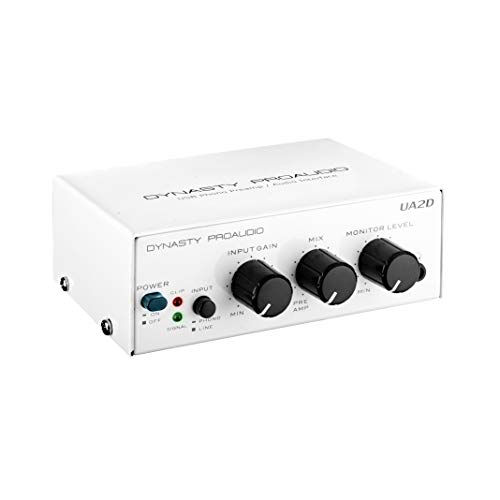
✅The Dynasty ProAudio UA2D has the ability to be connected with all kinds of turntables with moving magnet (MM) cart- ridge or line level audio devices (tape recorders etc. ), easily transfer and convert from your favor albums vinyl records to your computer or laptop into a digital format file for organization.
Advantages of Digital Signals
Digital signals stand out for several compelling reasons that enhance their appeal over analog signals. They experience less noise and distortion, ensuring clearer audio and data transmission. This clarity is vital for effective communication. Moreover, the mass production of digital circuits is cost-effective, leading to widespread use in various industries. Digital signals can also use encryption and compression techniques, enhancing data security while minimizing file sizes. With higher accuracy and reduced error rates, they rely on correction codes for reliable data recovery. In addition, digital audio systems can achieve a dynamic range exceeding 90 dB, delivering superior sound quality. Together, these advantages make digital signals a preferred choice in our increasingly tech-driven world. Additionally, the use of high-quality materials in turntable mats, such as acrylic and silicone, can optimize sound performance and reduce noise in analog systems.
Recommended Products

Band Equalizer: It has 15 bands of equalizaon, with aenuaon /boost of up to 12dB, at the center frequencies defined in the ISO standard (25 to 16KHz, 2/3 octave). Acts simultaneously on inputs A and B.
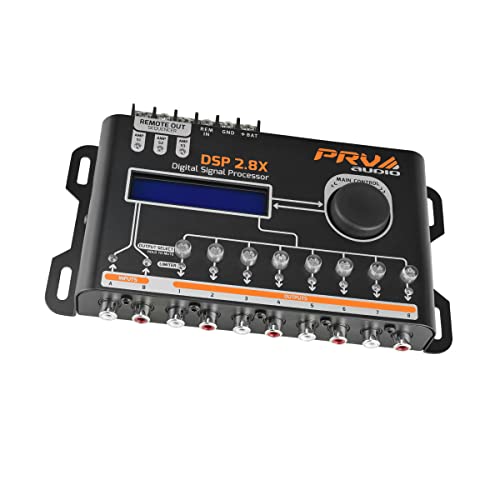
INTUITIVE INTERFACE CAR AUDIO DSP PROCESSOR: Through an LCD display (16x2 Characters) and intuitive interface, it allows real-time audio adjustments
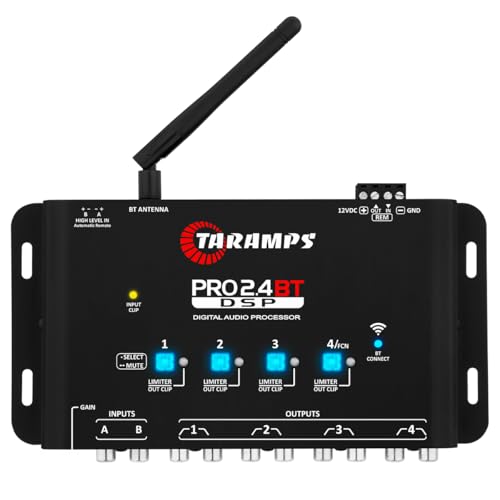
TOTAL AUDIO CONTROL IN YOUR HANDS: Experience unparalleled command over your car audio with the Taramps PRO 2.4BT Digital Signal Processor. Wirelessly configure all parameters in real-time via Bluetooth 5.4 BLE from your smartphone or tablet, giving you precision sound shaping right at your fingertips.
Advantages of Analog Signals
Analog signals present a unique set of advantages that cater to various preferences in audio and sound representation. One major benefit of analog recording is its ability to capture a continuous range of sound. This helps mimic natural sounds more accurately. Listeners often enjoy the pure sound and emotional warmth that analog formats, like vinyl, provide. These recordings can deliver dynamic ranges around 70 dB. While this is lower than digital formats, many audiophiles find the nuances in analog more appealing. The slight imperfections in these recordings can enhance the overall music experience. It is important for users to appreciate these characteristics, as they contribute to the unique charm of analog audio, ultimately creating a deeper connection to the music. Furthermore, direct-drive systems in DJ turntables ensure durability and high performance, which can complement the reliability expected from analog setups.
The Ongoing Debate: Community Perspectives
How do personal experiences shape opinions in the ongoing analog versus digital debate? Community discussions reveal a passionate split. Many audiophiles cherish analog sound, citing its warmth and emotional richness, particularly when listening to vinyl records. In contrast, proponents of digital electronics enjoy the clarity and convenience that digital formats offer. These discussions often include personal anecdotes, illustrating how individual preferences impact sound experiences. For instance, some listeners appreciate the tactile engagement of vinyl, while others prefer the portability of digital music. Active participation in these debates fosters deeper understanding and exploration of both audio types. Accordingly, each perspective brings valuable insights into the unique qualities of analog and digital sound technologies, helping everyone find their own listening preferences. Some turntable record players feature Bluetooth connectivity, allowing users to stream music from mobile devices, bridging the gap between traditional and modern listening experiences.
Applications of Analog and Digital Signals
Understanding the applications of analog and digital signals can clarify their roles in everyday technology. Analog signals are widely used in audio recording, such as vinyl records and tape machines. They reproduce sound naturally through continuous waveforms. In contrast, digital signals dominate areas like broadband communication and cellular networks, providing efficient data processing with binary encoding. You’ll find analog signals in applications like temperature and image sensing. They represent real-world phenomena through smooth variations. However, digital technology enables essential features like encryption and compression in streaming services, allowing huge music catalogs with minimal quality loss. While digital systems are increasingly popular, analog remains crucial in legacy systems and high-fidelity audio applications. It’s a blend of old and new in our tech world.
Recommended Products
Used Book in Good Condition


Frequently Asked Questions
Which Format Is Better for Live Music Recordings?
The best format for live music recordings depends on capturing live performance nuances and the audience engagement impact. Sound quality comparisons reveal that analog often provides warmth, while digital excels in clarity and convenience.
Do Professionals Prefer Digital or Analog for Mixing and Mastering?
Professionals often favor digital for mixing techniques, appreciating its workflow efficiency and versatility. However, some still prefer analog for mastering preferences, valuing its warmth and character, leading to a blend of both methods in practice.
How Do Different Speakers Affect Audio Quality in Each Format?
Different speaker types considerably affect audio quality, particularly in frequency response and soundstage effects. Analog systems may enhance warmth and depth, while digital setups excel in clarity, highlighting how speaker characteristics influence perceived audio quality.
Can Digital Audio Replicate the Warmth of Analog Sound?
“You can’t have your cake and eat it too.” Digital audio often struggles to replicate the warmth of analog sound due to tape saturation and varying frequency response, ultimately reflecting individual listener preference in audio experiences.
What Are the Cost Differences Between Analog and Digital Equipment?
Initial costs for analog equipment are often higher, including maintenance expenses, while digital equipment typically offers lower up-front costs. Nevertheless, long-term investments in analog can yield unique benefits, influencing overall value and usability.


