As an Amazon Associate, we earn from qualifying purchases. Some links on this site are affiliate links at no extra cost to you. Our recommendations are based on thorough research and editorial judgment.


How Different Genres Use Vinyl Mastering Differently

Different music genres use unique vinyl mastering techniques tailored to their sound. For example, rock emphasizes dynamic range, while jazz seeks warmth for enhanced tonal quality. Electronic and hip-hop focus on managing aggressive bass to avoid playback issues. Sibilance management is also crucial, especially in vocal-heavy genres. Each genre has specific needs for frequency balancing and track sequencing to maintain sound quality. Further insights into these practices can help improve your understanding of vinyl mastering techniques.
Key Takeaways
- Different genres employ unique vinyl mastering techniques tailored to their sound characteristics, ensuring optimal playback quality.
- Electronic and hip-hop focus on managing aggressive bass to prevent phase issues and distortion during playback.
- Rock and metal specifically address sibilance to mitigate high-frequency distortion, enhancing vocal clarity and instrumental fidelity.
- Acoustic and classical genres prioritize dynamic range and tonal warmth, utilizing RIAA equalization for balanced frequency response.
- Pop music mastering emphasizes loudness and track sequencing to maintain energy while avoiding distortion, crucial for radio play.
The Impact of Genre on Vinyl Mastering Techniques

You may be interested


Vinyl mastering is essential for producing high-quality records, and the genre of music markedly influences the techniques used. For genres like electronic and hip-hop, mastering focuses on managing the low end to avoid cutting issues. This preserves groove integrity and enhances sound quality. Acoustic and classical genres demand higher fidelity techniques, maintaining natural dynamics and tonal balance to prevent sound deterioration. Meanwhile, pop music often prioritizes loudness, placing energetic tracks at the beginning of each side. Rock or metal requires careful attention to sibilance to reduce distortion during playback. Each genre’s unique demands guide the vinyl mastering process, ensuring that playback retains the intended dynamics and overall sound experience, making every note count. For instance, the Denon AVR-X1700H supports advanced audio features like Dolby Atmos, which can be crucial for genres that require immersive sound formats.
Rock and Jazz: Emphasizing Dynamic Range and Warmth

Rock and jazz share a rich musical history that influences how they are mastered for vinyl. Rock emphasizes dynamic range, capturing the contrasts between loud electric guitars and softer vocals. This approach enhances sound quality, making listening more impactful. Energetic songs often start vinyl sides to maximize fidelity.
Jazz, on the other hand, benefits from a warm tonal quality achieved through careful frequency management. This creates a smoother sound, perfect for live instrumentation and improvisation. Both genres utilize RIAA equalization to balance high-frequency clarity with low-end warmth.
Mastering techniques also guarantee playback compatibility with vinyl’s physical constraints. By applying limiting and compression judiciously, both rock and jazz maintain their dynamic expression, allowing softer pieces to shine at the album’s end. The use of durable material selection in vinyl records ensures long-lasting quality and sound fidelity for these genres.
Recommended Products
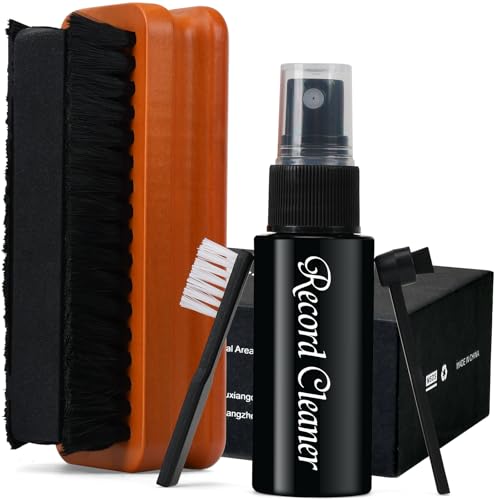
Patented Design - The record cleaning brush is made with a combination of velvet and microfiber that is tailor-made for efficient cleaning of vinyl records, effectively removing dust and minimizing noise.

Made by Professionals for Professionals: There are many products for record collectors today, yet our brand stands out. Recognized globally by new and old vinyl fans alike, we offer a professional vinyl cleaner and care solution for your needs.

【Complete Vinyl Record Cleaning Kit】 - Extreme care & regular maintenance is paramount to every vinyl album collection. This 7-in-1 vinyl record cleaning kit contains everything you need: Vinyl Record Cleaner, Velvet Brush, Microfiber Brush,Stylus Brush,Label Protector, Air Blower,Duster for Velvet Brush, Restore LPs Album.
Electronic and Hip-Hop: Managing Aggressive Bass and Loudness
In electronic and hip-hop music, managing aggressive bass and loudness is crucial for a successful vinyl pressing. Producers need to handle the strong bass lines carefully to avoid phase issues. This guarantees groove stability, which is essential for smooth playback. Loudness must also be balanced; too much can cause distortion. Vinyl mastering often uses a low-pass filter. This helps tame excessive high frequencies, reducing sibilance distortion in the final pressing. Start each side of the vinyl with louder, more dynamic songs for the best sound fidelity. Keeping the running time to 20 minutes or less per side is advisable. This prevents sound quality loss, especially in the inner grooves where things can get tricky. Regular cleaning accessories are essential for maintaining sound quality and preventing dirt buildup that could affect the playback of vinyl records.
Recommended Products

EVERYTHING YOU NEED - Make sure your prized albums stand the test of time with our vinyl record cleaning kit! It includes a 6.75 oz spray, a silicone protector, and an absorbent microfiber cloth.

The Only Vinyl Cleaning Kit You'll Ever Need: extreme care & regular maintenance is paramount to every vinyl album collection, big or small. but when it comes to vinyl cleaning kits, this 4in1 vinyl care set stands out from all the rest as it provides all the efficient tools to clean, preserve, restore & protect your precious collection. our complete vinyl record cleaner kit comes with a velvet brush & cleaning fluid for your albums plus a cleaning gel for the turntable needle. Record cleaner

Vinyl Cleaning Kit: Eliminate dust, dirt, and fingerprints with our ultra-soft velvet brush and XL cleaning solution in this vinyl cleaner, ensuring your favorite vinyl records play smoothly and maintain optimal sound
Sibilance and Frequency Considerations Across Genres

When mastering for vinyl, avoiding problems with sibilance and frequency is essential across various music genres. Genres featuring sibilant vocals, like pop, require careful de-essing to prevent distortion. This guarantees the playback remains smooth and enjoyable. In contrast, hip-hop and electronic music focus on bass levels, which need managing to avoid phase issues that can lead to groove skipping. For jazz or classical music, handle high-frequency content delicately. Low-pass filtering around 18kHz aids in preserving clarity and reducing distortion. Reggae and dub artists should minimize stereo bass elements to avoid cutting issues. By understanding these frequency dynamics distinct to each genre, mastering engineers can tailor their approach, enhancing the auditory experience for listeners. Many beginner turntables offer user-friendly features that support novice listeners, making it easier to appreciate the nuances of different genres.
The Role of Track Sequencing in Vinyl Mastering

Track sequencing is a vital aspect of vinyl mastering that greatly affects sound quality. For peak results, start with louder tracks to maximize groove space. This guarantees better fidelity at the beginning of the record. Longer tracks should be placed towards the end to avoid degradation in sound quality. Inner grooves are shallower, so positioning them correctly is necessary. Aim for an ideal side length of 20 minutes or less for best results. Quieter tracks fit better near the center, where tracking quality drops. Finally, consider genre-specific preferences, as some styles may need special attention to prevent distortion. Proper track sequencing helps you enjoy cleaner sound across your vinyl experience while keeping the listening journey intact. Using turntable isolation bases with stabilizers can further enhance sound quality by minimizing vibrations during playback.
Recommended Products

Ultimate Playback Precision: Enhance your audio experience by merging the isolation base's vibration reduction with the stabilizer's resonance control for unparalleled sound clarity

Enhanced Audio Clarity: By reducing external vibrations, it improves frequency response and detail, turning every playback into an undisturbed and accurate sound

Ultimate Playback Precision: Enhance your audio experience by merging the isolation base's vibration reduction with the stabilizer's resonance control for unparalleled sound clarity
Specific Mastering Strategies for Popular Genres
Mastering for different music genres requires tailored strategies to guarantee ideal sound quality on vinyl. For hip-hop and EDM, focus on low-frequency management to avoid skips and ascertain heavy bass plays smoothly. Rock and metal genres need to tackle sibilance and high-frequency distortion to prevent harshness from loud mixes. Acoustic and folk music benefit from a wider dynamic range, preserving sound integrity and allowing extended play times under 20 minutes. In jazz and orchestral music, aim for quieter cuts that highlight intricate details while providing clarity and warmth. Pop music often blends styles, requiring careful EQ adjustments and light limiting to maintain loudness without distortion. These strategies will help achieve the best possible vinyl sound. Synthesizers have played a pivotal role in the evolution of electronic dance music, impacting various genres through innovative production techniques and creative sound design.
Recommended Products

ACHIEVE CRISP, CLEAR SOUND: This 5-in-one vinyl record cleaning kit includes all the benchmark essentials for a spotless and rich sounding collection. In this kit, you will receive (1) Velvet Brush (1) Microfiber Brush (1) Stylus Brush (1) bottle of Cleaning Solution and (1) handy Storage Pouch. With these tools, you’ll be able to tackle any cleaning session with ease and perfection.

This high-contrast protractor tool enables you to achieve precise alignment of your turntable phonograph cartridge stylus with ease. Its high-contrast cartridge alignment markings provide improved visibility for accurate alignment and optimal sound quality. Prevent premature wear and tear on your stylus while optimizing your turntable setup with this easy-to-use, durable tool.

Fear Inoculum
The Evolving Standards of Vinyl Mastering in Modern Music
Vinyl mastering standards have shifted considerably in response to the vinyl revival that began in the mid-2000s. This growth has sparked changes in the mastering process for vinyl records. Today, cutting engineers prioritize sound quality by effectively employing the RIAA EQ to balance high and low frequencies. The goal is to manage frequency dynamics, reducing sibilance and avoiding distortion or skipping. Modern music often requires a separate, lightly limited 24-bit dynamic master for vinyl, tailored to the record’s physical limitations. This attention to detail improves audio quality and enhances the listening experience. As vinyl becomes a collectible format, mastering for it reflects industry trends, ensuring that each release meets the evolving expectations of music lovers. Incorporating shatter-resistant materials in vinyl record frames is also part of this trend, as it helps preserve the aesthetic and physical integrity of vinyl displays in homes.
Frequently Asked Questions
Why Is Mastering for Vinyl Different?
Mastering for vinyl differs due to its unique cutting process, requiring adjustments in groove depth and frequency range. Dynamic range, surface noise, needle tracking, playback speed, weight distribution, vinyl thickness, and equalization curve all considerably impact sound quality.
Do Songs Get Mastered Different to Be Pressed on Vinyl?
Songs are mastered differently for vinyl, employing techniques like frequency tailoring, instrument balancing, and groove spacing. This process enhances warmth, reduces noise, adheres to loudness limits, and considers track sequencing for ideal playback experience.
Why Do Audiophiles Prefer Vinyl?
In audiophile culture, vinyl captivates with its analog warmth and rich sound quality. The tactile interaction, nostalgia factor, and collectible value of records deepen the listening experience, fostering a profound appreciation for music’s dynamic range and artistry.
What LUFS Is Best for Vinyl Mastering?
For vinyl mastering, ideal LUFS levels generally range from -12 to -14, preserving dynamic range while accommodating vinyl frequency limitations. Mastering techniques vary by genre, affecting playback quality and audio perception during the pressing process.