As an Amazon Associate, we earn from qualifying purchases. Some links on this site are affiliate links at no extra cost to you. Our recommendations are based on thorough research and editorial judgment.


Understanding Tonearm Geometry and Design

Tonearm geometry is key for quality vinyl playback. It includes effective length, which is the distance from the pivot to the stylus, and overhang, the distance the stylus extends beyond the spindle. A longer tonearm generally results in a flatter arc, reducing tracking error and distortion. Also, the offset angle must be adjusted correctly for better sound quality. Proper setup guarantees your records play safely. Exploring these concepts can enhance your understanding of tonearm design.
Key Takeaways
- Tonearm geometry aims to minimize tracking errors, enhancing sound quality by ensuring accurate stylus alignment with record grooves.
- Effective length defines the distance from the pivot to the stylus tip, influencing tracking precision and distortion levels.
- Overhang must be precisely adjusted, as it affects how well the stylus follows record grooves.
- Offset angle adjustments are crucial for reducing horizontal tracking error and improving playback accuracy.
- Longer tonearms generally yield lower tracking angle errors and better performance across the entire record surface.
The Importance of Tonearm Geometry in Vinyl Playback
You may be interested


When exploring vinyl playback, understanding tonearm geometry is essential, especially for beginners. Tonearm geometry helps reduce tracking errors, which can distort sound. The effective length of a tonearm measures from the pivot point to the stylus tip. Longer tonearms allow for flatter arcs, notably minimizing tracking error as the needle moves across the record. Overhang, the distance the stylus extends beyond the spindle, also affects tracking precision. Using alignment geometries like Baerwald, Löfgren, or Stevenson can establish different inner ‘null points’ that enhance audio fidelity. Ensuring proper setup of your turntable cartridge can significantly improve sound quality and prolong the life of your equipment. Correctly setting up tonearm geometry not only reduces distortion but also benefits stylus durability and channel balance, ensuring a better listening experience overall. Adjusting these elements really pays off in sound quality!
Understanding Tracking Error and Its Effects on Sound Quality

Setting up a tonearm correctly is important, not just for reducing distortion but also for achieving ideal sound quality. Tracking error is the angular difference between the groove’s tangent and the cantilever’s axis. This error can distort audio signals. A small error of 0.2 mm in mounting distance can result in a 0.2º tracking error at the minimum groove radius of 60 mm. To minimize tracking error, pay attention to the offset angle and effective length of your tonearm. Accurate measurements are essential. If not addressed, tracking angle errors can increase 2nd harmonic distortion, altering your listening experience. Regularly check your setup to guarantee peak sound quality, and enjoy your vinyl more fully. It is also crucial to choose compatible replacement styluses to ensure record safety and optimal performance, preventing potential damage to your vinyl collection.
Effective Length, Overhang, and Their Relationship

Understanding effective length and overhang is essential for anyone adjusting a tonearm. The effective length refers to the distance from the pivot point to the stylus tip. This measurement affects how well the tonearm tracks the record grooves and minimizes distortion. Overhang is the extra extension of the stylus beyond the spindle and is found by subtracting the pivot to spindle (P2S) distance from the effective length. To achieve proper alignment, the overhang needs to be adjusted, often using adjustable headshell slots. Non-standard cartridge fixing distances can complicate setup, so it’s important to understand this relationship. Addressing effective length and overhang correctly will help reduce tracking angle error, enhancing overall sound quality. Some turntables, like the Denon DP-450USB, incorporate a unique curved tonearm that aids in reducing distortion, thus enhancing the overall audio clarity.
Exploring Offset Angle and Tracking Performance

To achieve ideal tracking performance, adjusting the offset angle is essential for any tonearm setup. The offset angle minimizes horizontal tracking error, helping the stylus stay tangent to the groove. It’s important to note that a smaller offset angle generally enhances tracking accuracy, particularly in longer tonearms. Careful adjustment is vital; even slight misalignments can lead to significant angular error and harmonic distortion. The relationship between the stylus’s drag force and the offset angle also impacts audio playback quality. To optimize performance, you must locate the two null points, where the stylus properly aligns with the groove. This process reduces distortion, ensuring better sound reproduction and clarity in your music. Aim for precision, and enjoy those sweet melodies. It’s also beneficial to use a Turntable Azimuth Cartridge Alignment Protractor for achieving precise cartridge placement, which can further enhance sound quality and reduce wear on your records.
Recommended Products
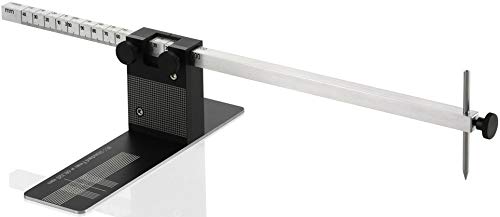
The IEC Cartridge Alignment Gauge is an aluminum gauge for all radial tonearms.

Premium Audiophile System: The SoulBox S1 pairs powerful stereo bookshelf speakers with streaming tech and a built-in switchable phono preamp. Play your favorite vinyl records or stream music from your smart devices—an entry-level audiophile system designed for ultimate versatility.

Built-in 4 stereo Speakers: 2 silk tweeters and 2 mid-bass speakers produce natural, well-balanced studio sound with massive bass, sounds with minimal distortion and decent tonal quality. The built-in preamplifier can be connected to externally powered speakers or stereo system via an RCA cable
The Role of Null Points in Tonearm Alignment

Achieving ideal sound quality from a turntable begins with the concept of null points. These are specific locations along the tonearm‘s movement where the stylus aligns perfectly with the groove, resulting in zero tracking error. Typically, a tonearm has two null points: one near the outer edge of the record and another close to the inner grooves. Each alignment geometry, such as Baerwald or Stevenson, has unique null point positions that influence tracking error and distortion levels during playback. To set these points, use protractors and alignment gauges to adjust the tonearm’s overhang accurately. Properly aligning the tonearm at the null points minimizes distortion, making your listening experience more enjoyable and maintaining the fidelity of the audio. Regular calibration and maintenance of the alignment tools are essential for high-fidelity reproduction, contributing to longer turntable lifespan and richer audio quality.
Advantages of Longer Tonearms Over Shorter Designs
A longer tonearm, such as a 12-inch design, offers several advantages over its shorter counterparts. These longer tonearms produce smaller tracking angle errors, which means they create a flatter swing arc. This leads to reduced distortion and improved playback accuracy across the record surface. Additionally, the increased effective length lowers the average tracking error on inner grooves, where shorter arms often struggle. Moreover, longer tonearms generally experience lower skating force, promoting even groove wear and better channel balance. Their higher effective mass suits low-compliance cartridges, helping the resonant frequency stay optimal and minimizing resonance issues. Overall, the use of longer tonearms enhances tracking precision and reduces harmonic artifacts, contributing to a richer listening experience. For beginners exploring vinyl, choosing a record player with adjustable magnetic cartridges can further improve sound quality and playback performance.
Recommended Products

EXHILARATING SOUND PERFORMANCE - Immerse yourself in the ultimate listening experience by pairing a fully loaded high fidelity turntable with endlessly versatile, room-filling 150-watt powered floorstanding speakers

Authentic DJ Turntable Experience - Full 12-inch black acrylic control disc with motorized platter to control four decks of playback; Traditional, familiar turntable layout

PURE ANALOG PERFORMANCE - The definitive vinyl record listening experience for beautifully warm and natural music, transporting you into the center of the performance
Practical Considerations for Tonearm Setup and Mounting
When setting up a tonearm, accurate measurements are vital for achieving the best sound quality. Start with the pivot to spindle (P2S) distance. This measurement guarantees that the tonearm’s geometry aligns correctly, minimizing tracking error. Use alignment protractors designed for methods like Baerwald or Löfgren to set the correct overhang, which is essential for proper cartridge positioning. Fixed-mount turntables may restrict alignment adjustments, but it’s still possible to find workable mounting distances. Remember, adjustable headshell slots provide flexibility, allowing fine-tuning of zenith and overhang settings. Taking the time for careful installation will greatly enhance turntable performance, making it worthwhile for both novices and experienced users. Precision will reward your efforts with clear, rich sound. For optimal sound fidelity, regular calibration tools can ensure that the turntable maintains consistent speed, enhancing the overall vinyl playback experience.
Recommended Products

M dual Magnet cartridge with Micro line stylus

Special limited edition Stealth version of the popular Ortofon 2M Blue Moving Magnet Phono Cartridge

【Work with bluetooth speaker or active speakers】 Our turntable features a wireless Bluetooth output connection, compatible with a variety of Bluetooth protocols, and can be paired with Bluetooth speakers or headphones, so you don't have to be bound by cables and enjoy high-quality music.You can also connect with any active speakers for lossless audio quality.
Frequently Asked Questions
What Materials Are Commonly Used in Tonearm Construction?
Aluminum, carbon fiber, and various metal alloys dominate tonearm construction. Each material influences tonearm resonance uniquely; aluminum offers durability, carbon fiber reduces weight, while wood tonearms provide warmth, enhancing auditory experiences for discerning listeners.
How Do Different Tonearm Shapes Affect Sound Quality?
Different tonearm shapes greatly affect sound quality; S-shaped tonearms often reduce tracking errors, while straight tonearms enhance stiffness. Gimbal bearings provide stability, while unipivot design promotes freedom of motion, influencing overall audio performance.
Can Tonearm Design Impact Cartridge Performance?
Tonearm design greatly influences cartridge performance; ideal cartridge alignment enhances sound clarity, while precise tracking angle minimizes distortion. Employing dampening techniques and effective resonance adjustment further elevates audio fidelity, creating a harmonious interplay between components.
What Maintenance Is Required for a Tonearm?
Regular tonearm maintenance includes tonearm calibration, adjusting tracking force, and setting anti-skate for ideal performance. Additionally, proper bearing lubrication guarantees smooth movement, enhancing overall functionality and prolonging the life of the tonearm and cartridge.
Are There Specific Brands Known for Superior Tonearm Design?
Certain turntable brands, such as Rega and Technics, are renowned for their tonearm innovations. Performance comparisons often highlight these brands’ superiority, rooted in historical designs that balance precision and durability for ideal listening experiences.


